Skip to content
Top-rated outdoor gear, ranked

Best Of 2026

Best Boating Bilge Pumps of 2026

Our top 10 picks, independently ranked. Budget to premium.

A bilge pump is cheap insurance against the water that always finds its way aboard, whether from rain and spray, a weeping packing gland, or a live-well overflow. The category confuses people because the words "bilge pump" cover four very different tools: automatic electric pumps that run on their own, plain electric pumps you wire to a switch, portable battery units, and manual hand pumps. Buying the wrong type for your boat is the most common and most costly mistake.

Capacity numbers mislead too. A pump rated 1100 GPH is measured at open flow with no hose and no lift, and real output drops sharply once you add head height and a discharge run. Treat the rating as a ceiling, not a promise, and size up rather than down. A widely used rule of thumb is at least 1000 GPH for boats under 20 feet, with more capacity, and ideally a second pump, as boats get larger.

This guide spans the whole price spectrum so you can see the market end to end, from a 30 dollar automatic to a manual diaphragm pump that costs five times as much and never needs a battery. The best answer for most recreational boaters is not one pump at all but a layered setup: a reliable automatic for daily protection, plus a manual or portable unit for the day the electrics fail.

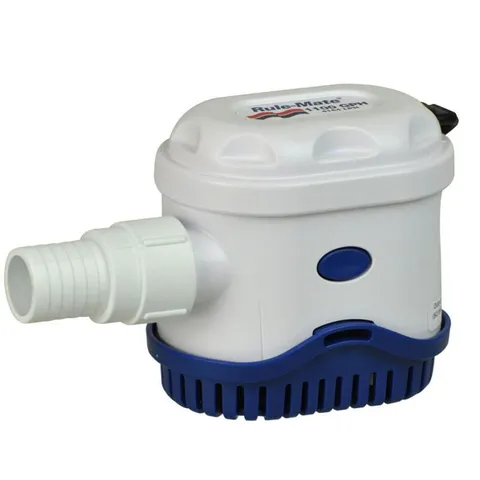
Rule-Mate RM1100A Automatic Bilge Pump 1100 GPH
Best OverallMid-range

1. Rule-Mate RM1100A Automatic Bilge Pump 1100 GPH

Rule

$60–$95

The RM1100A packs Rule's field-effect sensing into an all-in-one housing, so it checks for water on its own with no separate float switch to jam. For a typical 16 to 24 foot recreational boat, this is the capacity and reliability sweet spot.

Best for: Most recreational boats from 16 to 24 feet wanting hands-off protection

Electronic sensing replaces a failure-prone float switch · 1100 GPH suits most 16 to 24 foot boats · Compact all-in-one body with a snap-lock strainer · Field-effect sensor ignores engine oil in the bilge

Sensing electronics cost more than a bare pump · Rated flow drops noticeably once you add head height

SEAFLO 06 Series Automatic Submersible Bilge Pump 1100 GPH
Best BudgetBudget

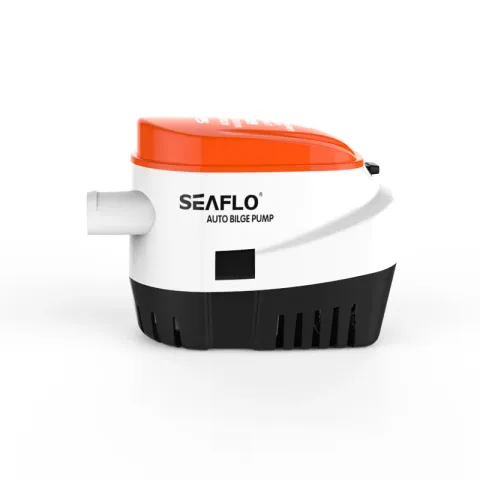
2. SEAFLO 06 Series Automatic Submersible Bilge Pump 1100 GPH

SEAFLO

$30–$45

You get full 1100 GPH capacity, a built-in float switch, and a 4 year warranty for roughly the price of a tank of fuel. It is the value pick that still runs automatically straight out of the box.

Best for: Value-focused owners who want automatic protection without the premium price

Built-in float switch gives true automatic operation · Long 4 year warranty at a budget price · Snap-off strainer base makes cleaning quick · 1-1/8 inch outlet clears water fast

Mechanical float can foul with debris over time · Dealer support is thinner than Rule or Attwood

Whale Supersub Smart 650 Automatic Bilge Pump (SS5212)
Best PremiumPremium

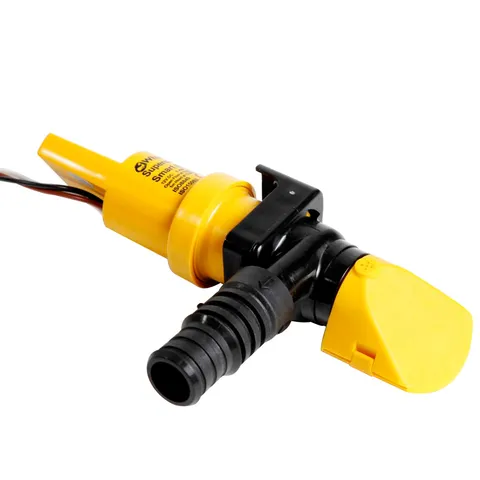
3. Whale Supersub Smart 650 Automatic Bilge Pump (SS5212)

Whale

$120–$160

The low-profile body slides under engines and cockpit floors where a standard pump simply will not fit, and its electronic sensor drains the bilge down to about a third of an inch. This is the pump for tight, hard to reach spaces.

Best for: Boats with shallow or confined bilges a tall pump cannot fit

Very low profile fits cramped, shallow bilges · Electronic field sensor needs no separate switch · Drains down to roughly 1/3 inch · Integrated non-return valve stops backflow

650 GPH is modest, so it is not an emergency dewatering pump · Costs far more than a basic 650 GPH unit

Attwood Sahara S500 Automatic Bilge Pump 500 GPH
Mid-range

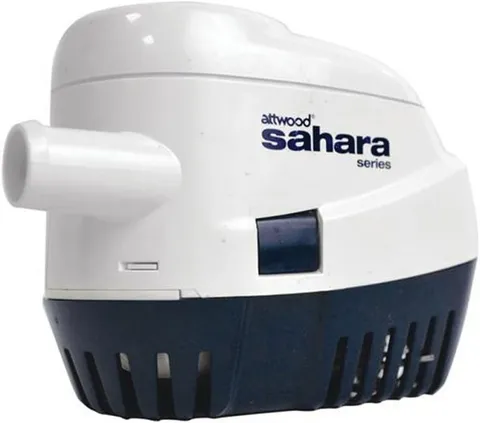
4. Attwood Sahara S500 Automatic Bilge Pump 500 GPH

Attwood

$45–$70

A dependable small-boat automatic with a mercury-free float switch built into a compact body and a very low current draw. At 500 GPH it is sized for tenders, jon boats, and small runabouts rather than big hulls.

Best for: Tenders, jon boats, and small runabouts up to about 16 feet

Integrated mercury-free float switch · Low 1.5 amp draw is easy on small batteries · Trusted Attwood build with a 3 year warranty

500 GPH is only enough for small craft · The float adds a moving part that can stick

Johnson Pump Ultima Combo Automatic Bilge Pump 1000 GPH
Best ValueMid-range

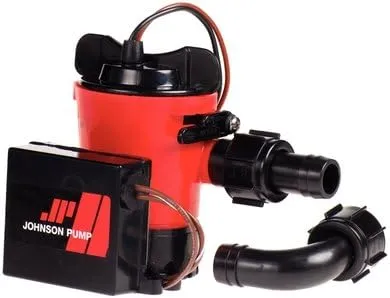
5. Johnson Pump Ultima Combo Automatic Bilge Pump 1000 GPH

Johnson Pump

$60–$90

The Ultima Combo pairs a serviceable Dura-Port cartridge pump with Johnson's sealed field-effect switch, so the sensor never touches the water and cannot corrode. Swap the motor cartridge in seconds instead of replacing the whole unit.

Best for: Owners who want serviceable, corrosion-resistant automatic sensing

Sealed field-effect sensor resists oil, debris, and corrosion · Replaceable cartridge motor simplifies service · 1000 GPH suits mid-size recreational hulls · Meets the ISO 8849 marine standard

Costs more than a basic float-switch pump · The sensor delay can leave a little water behind

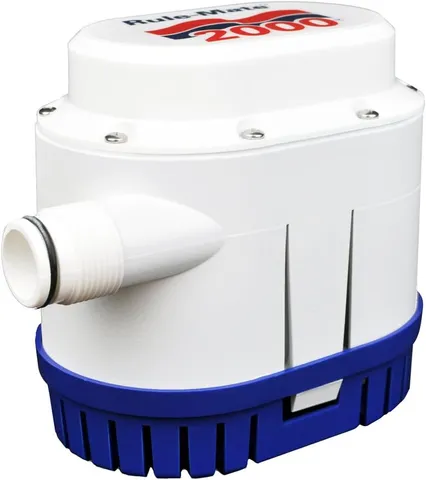
Rule-Mate RM2000A Automatic Bilge Pump 2000 GPH
Premium

6. Rule-Mate RM2000A Automatic Bilge Pump 2000 GPH

Rule

$200–$330

When you want fast dewatering for a larger cruiser or a boat that sees rough water, 2000 GPH of open-flow capacity clears the bilge in a hurry. It uses the same field-effect sensing as the smaller Rule-Mates, scaled up.

Best for: Larger cruisers and offshore-minded boaters wanting rapid dewatering

2000 GPH clears water quickly on bigger boats · All-in-one sensing, no separate float switch · Field-effect sensor ignores engine oil

Priciest option in this guide · Overkill and higher current draw on small boats

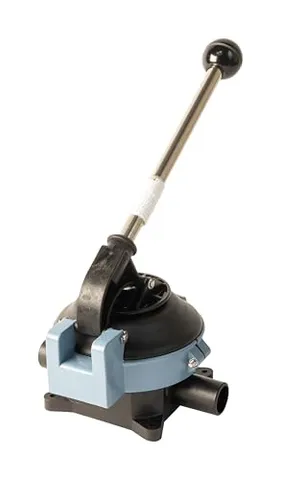
Whale Gusher Titan Manual Diaphragm Bilge Pump (BP4402)
Premium

7. Whale Gusher Titan Manual Diaphragm Bilge Pump (BP4402)

Whale

$125–$175

A manual diaphragm pump has no electrics to fail and no battery to drain, which is exactly why serious cruisers keep one aboard. The Titan moves up to 28 gallons a minute by hand and rebuilds in minutes with standard kits.

Best for: Cruisers wanting a battery-independent backup that will not quit

Works with dead batteries and flooded electrics · Up to 28 GPM at about 70 strokes per minute · Rebuildable with off-the-shelf service kits · Handles debris that would clog an electric pump

Requires a person actively pumping · Higher price and real installation effort

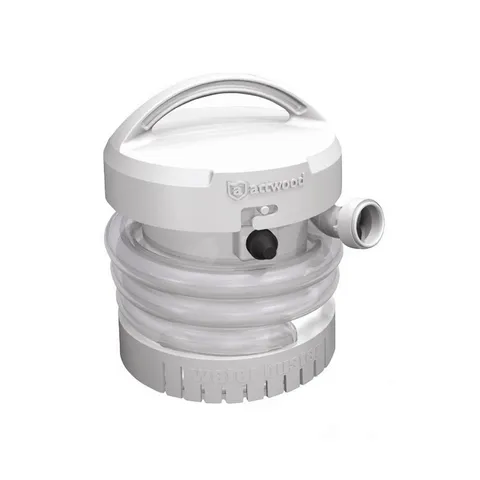
Attwood WaterBuster Portable Pump 200 GPH
Editor's PickBudget

8. Attwood WaterBuster Portable Pump 200 GPH

Attwood

$25–$38

Powered by three D batteries, it drops into any flooded space, from a swamped dinghy to a rain-filled cockpit, with no wiring at all. It is not a permanent bilge pump, but as a grab-and-go backup it earns a spot in the locker.

Best for: Kayaks, dinghies, and any boat needing a wire-free backup pump

Fully portable, runs about 5 hours on D batteries · Needs no wiring or through-hull fitting · Doubles for kayaks, dinghies, and pool covers

Only 200 GPH, strictly a backup · Not intended for permanent installation

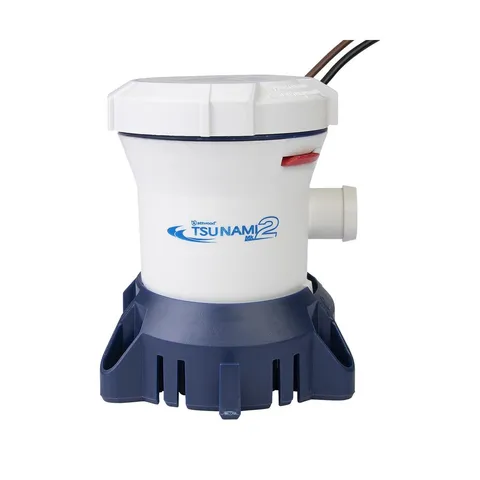
Attwood Tsunami MK2 T800 Cartridge Bilge Pump 800 GPH
Budget

9. Attwood Tsunami MK2 T800 Cartridge Bilge Pump 800 GPH

Attwood

$30–$48

A non-automatic cartridge pump you pair with your own float or panel switch, built around a patented impeller that ejects trapped air. The replaceable cartridge means a burned-out motor is a cheap fix rather than a whole new pump.

Best for: DIY owners building a pump-plus-switch setup on a budget

Replaceable cartridge motor keeps repairs cheap · X-Air impeller design prevents airlocks · Rotatable outlet eases tight installs · Low 3.5 amp draw

Not automatic, so it needs a separate switch · 800 GPH suits smaller boats only

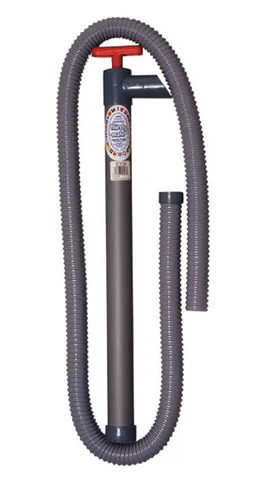
Beckson Thirsty-Mate 136PF6 Manual Hand Bilge Pump
Budget

10. Beckson Thirsty-Mate 136PF6 Manual Hand Bilge Pump

Beckson

$28–$45

A simple self-priming hand pump that moves up to 13 gallons a minute and cannot rust or corrode. Every boat should carry one as the ultimate no-power backup that is always ready.

Best for: Every boater wanting a foolproof manual backup

No batteries or wiring, always ready to use · Self-priming, up to 13 GPM by hand · Corrosion-proof materials, made in the USA · Cleans out easily if it clogs

Manual effort only · Slower than a strong electric pump

How we choose

We ranked these pumps by how well they serve real recreational boaters rather than by spec-sheet flow alone, weighting reliability, ease of installation and service, sensing method, warranty, and honest output at realistic head height. The three tiers reflect price and role together. Budget picks cover value automatics, portable units, and manual backups under roughly 45 dollars. The mid tier is where proven brand-name automatics with electronic or field-effect sensing live. Premium covers low-profile electronics, high-capacity dewatering pumps, and rebuildable manual diaphragm pumps built for hard use. We consulted manufacturer specifications, marine retailers, and owner forums. This guide is editorially independent: no manufacturer paid for placement or a rating, and the rankings reflect our own assessment. We may earn a commission on purchases made through our links, which never changes how we rank.

Common questions

Match capacity to hull length, then add margin. A common guideline is at least 1000 GPH for boats under 20 feet, 1500 GPH or more from 20 to 30 feet, and 2000 GPH or dual pumps beyond that. Remember these are open-flow figures, so real output after hose and lift is lower. When in doubt, size up. A pump that is slightly too big only costs a little more current, while one that is too small can lose the boat.

For everyday protection you want an automatic electric pump that runs whether or not you are aboard, because most flooding happens at the dock or under way when nobody is watching the bilge. A manual hand or diaphragm pump is not a replacement but a backup, since it keeps working when the battery is dead or the wiring is underwater. The safest boats carry both.

Rated flow is measured at open flow with no discharge hose and no vertical lift. Every foot of head height and every bend of hose cuts the real number, so a 1100 GPH pump may deliver closer to 700 GPH once installed. Plan for this by choosing a higher rating than you think you need and by keeping the discharge run short, smooth, and free of sharp bends.

On anything beyond a small tender, yes. A single pump is a single point of failure that can clog, burn out, or lose power at the worst moment. A layered setup uses a primary automatic pump low in the bilge, a larger high-water pump mounted slightly higher for emergencies, and a manual pump as the last line. Even a portable battery unit stowed in a locker adds real peace of mind.

Mechanical float switches are cheap and easy to understand, but the moving float can jam with debris or stick over time. Electronic and field-effect sensors have no moving parts, ignore an oil sheen, and drain the bilge lower, though they cost more and can be harder to bench test. For a set and forget primary pump, electronic sensing is usually worth the premium. For a simple backup, a good float switch is fine.

Test it every trip by lifting the float or pouring in water and confirming the pump runs and clears. Every few months, clear the strainer of debris, check wiring and connections for corrosion, and make sure the discharge outlet is not blocked. Replace or rebuild any pump that hesitates or runs weakly, and never wait for a season-ending leak to discover it failed.

Some links are affiliate links, and we may earn a commission at no extra cost to you. It never affects our rankings.

In your pocket

Take every launch with you.

Free, no account needed. Ramps, marinas, marine conditions, and maps in your pocket.

  • Every marina and boat ramp in your pocket

  • NOAA wind, tide, and wave conditions live

  • Ramp and water reports from boaters out now

  • GPS tracking that keeps recording beyond cell coverage

The Boating Hubs app dashboard

For operators

Run your boating business?
Launch your branded surface.

Get your own branded surface in the Boating Hubs app and a directory listing in minutes. bookings, digital waivers, and your whole operation in one cockpit.