Skip to content
Top-rated outdoor gear, ranked

Best Of 2026

Best Marine Electronics of 2026

Our top 10 picks, independently ranked. Budget to premium.

Updated

Marine electronics are where a day on the water quietly tips from "fun" to "safe and easy", or the reverse. For recreational boaters and small-craft owners, the core kit hasn't changed: a chartplotter or fishfinder to see where you are and what's under the hull, a VHF radio to call for help when a phone has no bars, and increasingly an AIS receiver so you know what big traffic is bearing down on you. What has changed in 2026 is how much capability has trickled down to affordable price points. A sub-$150 fishfinder now ships with built-in GPS and CHIRP sonar; a $350 fixed radio now bundles an AIS receiver and NMEA 2000 networking that used to be reserved for offshore helms.

The tricky part is that the category spans an enormous price range (from a $90 fixed VHF to a $4,000 glass-bridge multifunction display), and a big-box product page won't tell you where the genuine value lives or where you're paying for offshore features a weekend lake boater will never touch. We picked across that whole spectrum so you can navigate the low end versus the high end deliberately, matching the gear to the boat and the water rather than to a brand's marketing.

This guide focuses on the equipment most recreational boaters actually buy first: chartplotter/fishfinder combos, fixed-mount and handheld VHF radios, and a couple of premium multifunction displays for owners building out a real helm. Every product below is a current, shipping 2026 model, chosen with the small-craft owner, not a charter captain, in mind.

At a glance

#ProductPrice
1$600–$650
2
GX2400 Matrix AIS/GPS

Standard Horizon

$350–$420
3$250–$335
4
STRIKER 4

Garmin

$100–$150
5$2,800–$3,500
6$400–$720
7
GX1400 Eclipse

Standard Horizon

$110–$150
8$600–$800
9
UM385

Uniden

$90–$130
10
NSS 4-12

Simrad

$2,600–$4,200
ECHOMAP UHD2 73cv
Best OverallMid-range

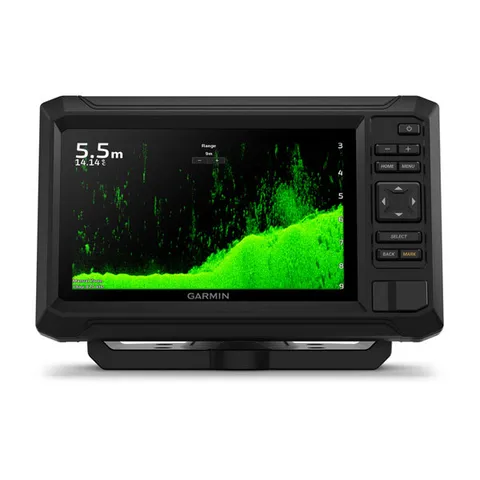
1. ECHOMAP UHD2 73cv

Garmin

$600–$650

A 7-inch keyed chartplotter/fishfinder with a bright sunlight-readable screen, preloaded Garmin Navionics+ charts, and CHIRP/ClearVü sonar, the do-everything unit most recreational boaters should buy first.

Best for: Coastal and inland boaters who want one screen that navigates and finds fish out of the box

Preloaded Navionics+ coastal and inland mapping with no extra chart purchase · Bright, sunlight-readable display with intuitive keyed (non-touch) controls that work with wet hands · Includes a GT20-TM transducer in the box and supports Quickdraw Contours mapping

Keyed interface is slower to pan/zoom than a touchscreen · No forward-facing or side-imaging sonar at this tier

Sources: garmin.com, basspro.com, defender.com
GX2400 Matrix AIS/GPS
Best ValueMid-range

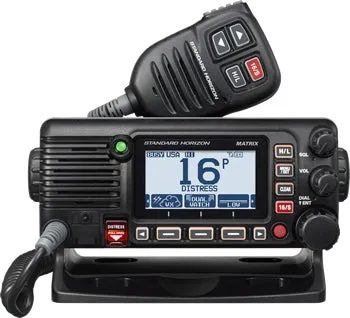
2. GX2400 Matrix AIS/GPS

Standard Horizon

$350–$420

A 25-watt fixed VHF that packs a built-in AIS receiver, integrated GPS, NMEA 2000, and a 30W hailer into one unit, features that used to cost far more, for about $100 over a basic radio.

Best for: Coastal cruisers who want AIS and DSC safety without adding a separate AIS box

Built-in AIS receiver displays nearby traffic right on the radio · Integrated 66-channel GPS plus NMEA 2000 for full DSC distress functionality · Channel-select knob and loud hailer/foghorn that cheaper radios omit

Receive-only AIS, doesn't transmit your position to other vessels · More features than a casual lake boater needs

Sources: amazon.com, westmarine.com, milltechmarine.com

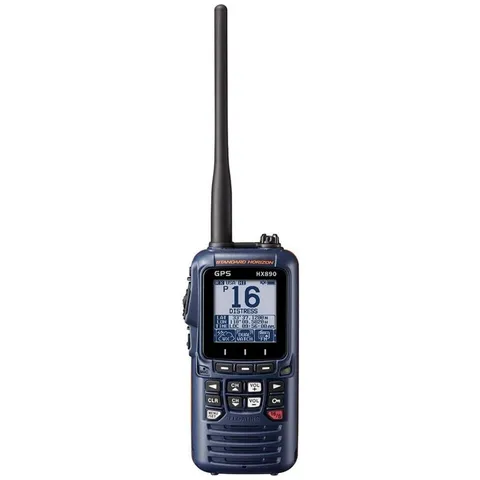
HX890 Floating Handheld VHF/GPS
Editor's PickMid-range

3. HX890 Floating Handheld VHF/GPS

Standard Horizon

$250–$335

The best-selling handheld VHF with integrated GPS, Class H DSC, and a body that floats and flashes a strobe if dropped, the ideal backup radio or primary for small open boats.

Best for: Any boater wanting a floating, GPS-equipped backup radio, or a primary on a small craft

Floats and is submersible (rated to survive a 5-foot drop on concrete) · Built-in GPS enables DSC distress calls and basic waypoint navigation · 11-hour lithium-ion battery and a 3-year warranty

6W output has shorter range than a 25W fixed radio · Pricier than basic floating handhelds without GPS

Sources: amazon.com, defender.com, twowayradiocenter.com

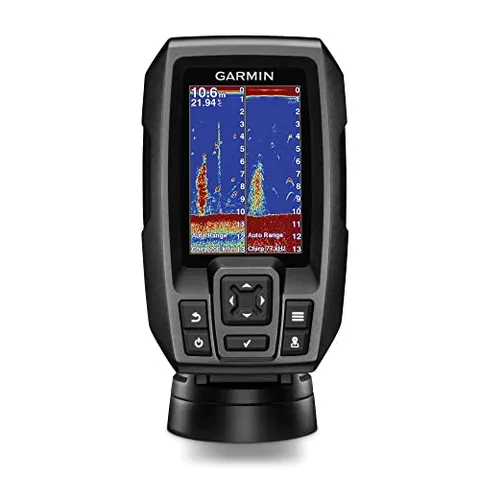
STRIKER 4
Best BudgetBudget

4. STRIKER 4

Garmin

$100–$150

A 3.5-inch fishfinder with CHIRP sonar and built-in GPS that delivers genuinely useful sonar and waypoint marking for around $130, the budget benchmark that still holds up in 2026.

Best for: Lake and small-boat anglers who want sonar plus GPS on a tight budget

Built-in GPS for marking spots and showing boat speed, rare at this price · CHIRP sonar gives clearer target separation than old single-frequency units · Simple, reliable, and easily moved between boats

Small 3.5-inch screen and no chartplotting/marine maps · No ClearVü or side imaging

Sources: garmin.com, amazon.com, outdoorlife.com

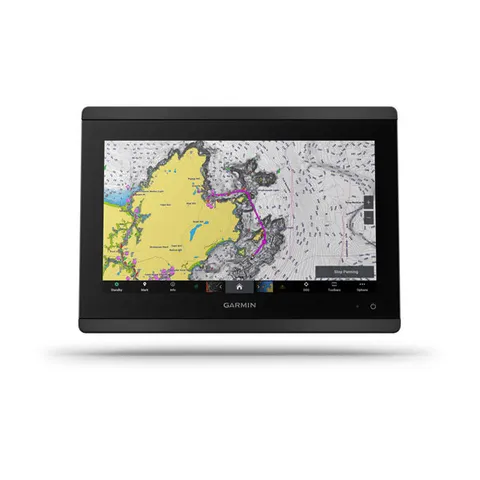
GPSMAP 8612xsv
Best PremiumPremium

5. GPSMAP 8612xsv

Garmin

$2,800–$3,500

A 12-inch full-HD IPS touchscreen multifunction display with built-in sonar, preloaded Navionics+ charts, and deep networking for radar, autopilot, and engine data, a true glass-helm centerpiece.

Best for: Owners of larger center consoles and cruisers building an integrated glass helm

Large, bright full-HD IPS touchscreen that's excellent in direct sun · Built-in dual-channel CHIRP and ClearVü/SideVü sonar support · Networks with Garmin radar, autopilot, cameras, and engine data for a full helm

Expensive, overkill for small boats and casual use · Realizing its potential means buying into more Garmin hardware

Sources: garmin.com, westmarine.com, boemarine.com

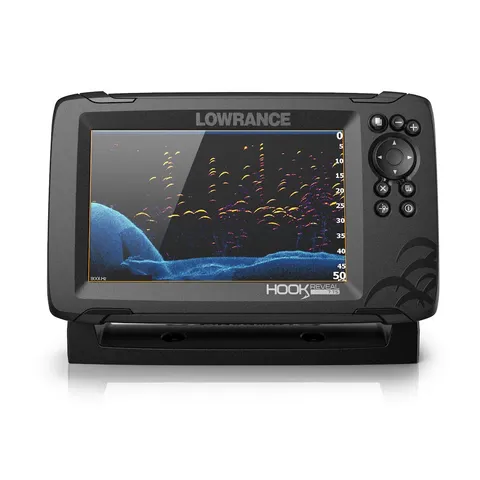
HOOK Reveal 7 TripleShot
Mid-range

6. HOOK Reveal 7 TripleShot

Lowrance

$400–$720

A 7-inch chartplotter/fishfinder combo that leans into fishing with DownScan, SideScan, and FishReveal, plus auto-tuning sonar and US Inland charts, a strong value for anglers.

Best for: Bass and inshore anglers who want imaging sonar on a 7-inch screen for the money

TripleShot transducer adds DownScan and SideScan imaging in the box · Autotuning sonar and FishReveal simplify dialing in a clear picture · Genie-mapping and US Inland charts included for navigation

Pricing varies widely by configuration and transducer · Interface and charts feel less polished than Garmin's for pure navigation

Sources: lowrance.com, westmarine.com, nvnmarine.com

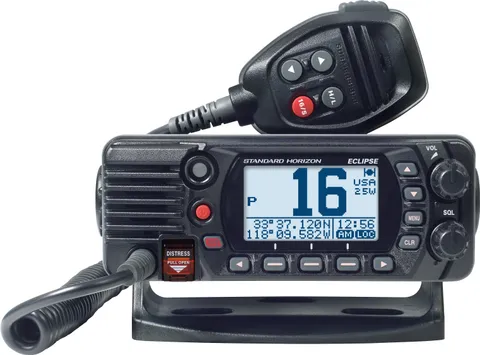
GX1400 Eclipse
Budget

7. GX1400 Eclipse

Standard Horizon

$110–$150

A compact 25-watt fixed VHF that nails the essentials (DSC, NOAA weather, and a clear front-panel display), at a price that makes it an easy first radio for any small boat.

Best for: Boaters who want a dependable, no-frills fixed VHF at the lowest sensible price

Full 25W output and Class D DSC distress calling · Compact case fits tight consoles; clear, simple interface · Trusted Standard Horizon build and 3-year waterproof warranty

No built-in GPS (the GX1400G variant adds it) or AIS · Up/down channel buttons rather than a selector knob

Sources: amazon.com, thegpsstore.com, standardhorizon.com

Premium

8. M510 PLUS EVO

Icom

$600–$800

A flagship fixed VHF with a 3.5-inch color display, integrated AIS receiver, NMEA 2000, and Wi-Fi smartphone control via the optional remote, a premium helm radio for boaters who want the best.

Best for: Cruisers and serious boaters wanting a top-tier, AIS-equipped fixed radio

Integrated AIS receiver and two-way hailer/RX functions · Bright color TFT display and NMEA 2000 networking · Wi-Fi/app control and optional wireless remote mic

Premium price for a VHF, well above what casual boaters need · AIS is receive-only; full features assume a networked helm

Sources: amazon.com, boemarine.com, thegpsstore.com

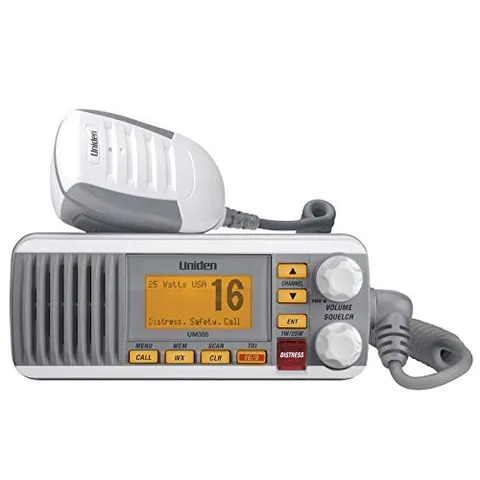
UM385
Budget

9. UM385

Uniden

$90–$130

A 25-watt fixed VHF with DSC, triple watch, and NOAA weather alerts that has earned a strong reputation as a reliable, affordable main radio for coastal recreational boats.

Best for: Budget-minded coastal boaters who want a proven, simple fixed VHF

Full 25W output with Class D DSC distress calling · Triple watch and NOAA weather alerting built in · Strong owner reviews and an easy, no-fuss interface at a low price

IPX4 water resistance is splash-rated, not submersible · No built-in GPS or AIS, must wire to an external GPS for DSC position

Sources: amazon.com, uniden.com, defender.com

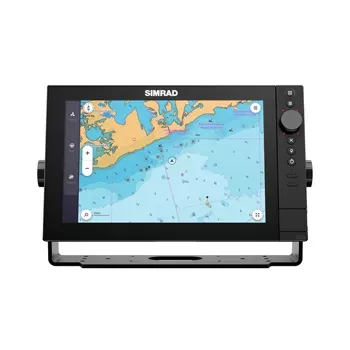
NSS 4-12
Premium

10. NSS 4-12

Simrad

$2,600–$4,200

Simrad's latest flagship multifunction display pairs a fast 8-core processor and dual-channel CHIRP sonar with both touchscreen and physical-button control, built for offshore navigation and radar integration.

Best for: Offshore-minded owners wanting a fast, expandable flagship helm with tactile controls

Hybrid touchscreen + physical keys work better in rough water · Fast 8-core processor with dual-channel CHIRP sonar and C-MAP charts · Deep networking for radar, autopilot, and full system expansion

Premium investment starting around $2,600 and climbing with screen size · Aimed at larger offshore boats; far more than small craft require

Sources: simrad-yachting.com, boatingmag.com, thegpsstore.com

How we choose

We selected real, currently-available models by cross-referencing 2026 marine-electronics buyers' guides, manufacturer spec pages, and multiple retailer listings to confirm each product is shipping and to triangulate realistic US street prices. Ranking reflects overall recommendation for a typical recreational boater (how well a unit balances capability, ease of use, safety value, and price), not raw spec count or cost. The three tiers separate genuinely different buyers: budget picks ($90–$150) cover essential function (entry fishfinders, no-frills fixed VHF) for lake and inshore boats; mid-tier ($250–$720) adds bigger sunlight-readable screens, AIS reception, GPS, and networking that suit coastal cruising and serious fishing; premium ($600–$4,200) covers large glass-bridge multifunction displays and feature-rich radios for owners building out a full integrated helm. We have no financial relationship with any manufacturer, accept no payment for placement, and ranked these solely on merit; retailer links may be affiliate links but do not influence selection or order.

Common questions

Yes. A cell phone fails exactly where you need it most, offshore or in a remote cove with no signal, and only reaches the one person you call. A fixed-mount VHF broadcasts to the Coast Guard and every nearby boat at once, which is what summons help fastest in an emergency. A DSC-equipped VHF wired to a GPS source can also send a one-button distress call with your exact position. Treat a VHF as required safety gear, not an optional accessory, and consider a floating handheld as a backup.

A fishfinder uses sonar to show what's under the boat: depth, bottom structure, and fish. A chartplotter shows your GPS position on a nautical chart for navigation. A 'combo' unit (most of our picks) does both on one screen, which is what the vast majority of recreational boaters want. If you only fish small lakes you can save money with a basic fishfinder/GPS like the Striker 4; if you navigate coastal waters you'll want detailed marine charts, which means a true chartplotter combo such as the ECHOMAP UHD2 or HOOK Reveal.

AIS (Automatic Identification System) shows nearby commercial ships and AIS-equipped boats as targets with their name, speed, and heading: invaluable for avoiding traffic in fog, busy harbors, or at night. A receive-only AIS (built into radios like the Standard Horizon GX2400 or Icom M510 PLUS) is a modest upcharge and well worth it for coastal and offshore boaters. A full transceiver, which also makes you visible to others, costs more and matters most if you run in heavy shipping lanes or want the added safety of being seen.

For most small craft, a 5- to 7-inch screen is the sweet spot, large enough to run split-screen sonar and chart views, small enough to fit a console without dominating it. Our 7-inch picks (ECHOMAP UHD2 73cv, HOOK Reveal 7) suit boats roughly 16–25 feet. Bigger 9- to 12-inch glass displays like the GPSMAP 8612xsv only make sense on larger center consoles and cruisers where you're networking radar, multiple sonar modules, and engine data, or where the helm sits far from your eyes.

Basic functions, no, sonar and chart ecosystems are proprietary, so a Garmin transducer won't feed a Lowrance display. But the NMEA 2000 standard lets units from different brands share data like GPS position, depth, and AIS targets over a common network backbone. In practice it's simplest to keep your chartplotter and sonar in one brand family for the best integration, while a NMEA 2000-capable VHF from any maker can still pull GPS and push DSC/AIS data to that display.

A capable entry setup, a 5-inch fishfinder/GPS plus a budget fixed VHF, can come together for roughly $250–$350. A well-rounded coastal package with a 7-inch chartplotter combo, a fixed VHF with AIS, and a floating handheld backup lands around $1,000–$1,400. A premium integrated helm with a 12-inch multifunction display, premium radio, and networked sensors runs $3,500 and well up. Spend first on the safety basics (VHF, reliable GPS), then scale the sonar and screen size to how and where you actually boat.

Some links are affiliate links, and we may earn a commission at no extra cost to you. It never affects our rankings.

In your pocket

Take every launch with you.

Free, no account needed. Ramps, marinas, marine conditions, and maps in your pocket.

  • Every marina and boat ramp in your pocket

  • File a float plan and ETA before you cast off

  • Harbor and inlet webcams before you tow

  • GPS tracking that keeps recording beyond cell coverage

The Boating Hubs app dashboard

For operators

Run your boating business?
Launch your branded surface.

Get your own branded surface in the Boating Hubs app and a directory listing in minutes. Bookings, digital waivers, and your whole operation live in one cockpit.