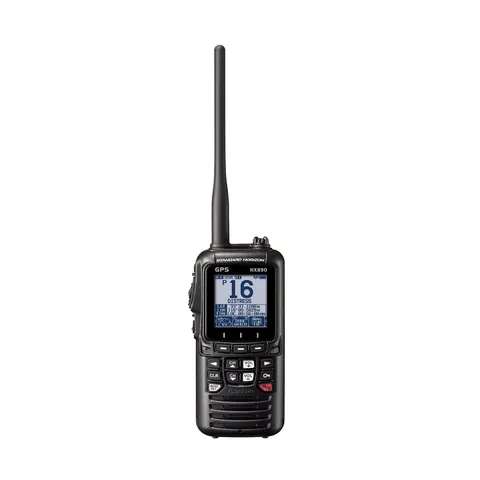
1. HX890
Standard Horizon
$199–$250
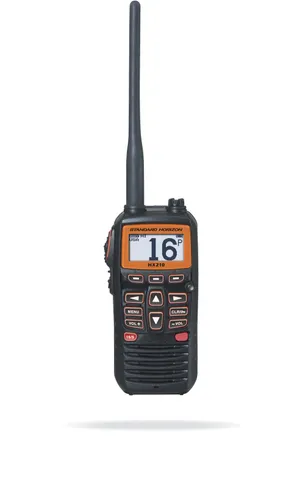
A floating handheld with real GPS, DSC distress calling, and a 6 watt transmitter, the HX890 does nearly everything a helm radio does while fitting in a pocket and surviving a swim. For most recreational boaters it is the single most useful radio you can buy.
Best for: Boaters who want one radio that works on any boat and floats if dropped
Built-in GPS feeds your exact position into DSC distress calls · Floats and flashes a strobe when it hits the water · IPX8 submersible with a 3 year waterproof warranty · Full 6 watt output plus a large, easy-to-read display
Menu system takes time to learn · Battery and short antenna limit range next to a fixed mount
Sources: amazon.com, westmarine.com, yachtingworld.com, defender.com