Booking a transient slip is different from owning a mooring. You have maybe 24–72 hours, no long-term relationship with the harbormaster, and no room for trial-and-error. When you pull in, you need to know whether the marina has shore power rated for your boat, a functioning pump-out, or wifi that won't leave you stranded. Too many cruisers show up expecting amenities that simply aren't there, or worse, discover the dockhand has already gone home. The gap isn't about luxury. It's about the gear that keeps you safe and comfortable: fresh water, waste systems, electrical infrastructure, and ground services that make a night's stay livable instead of miserable.
Power & Water Systems
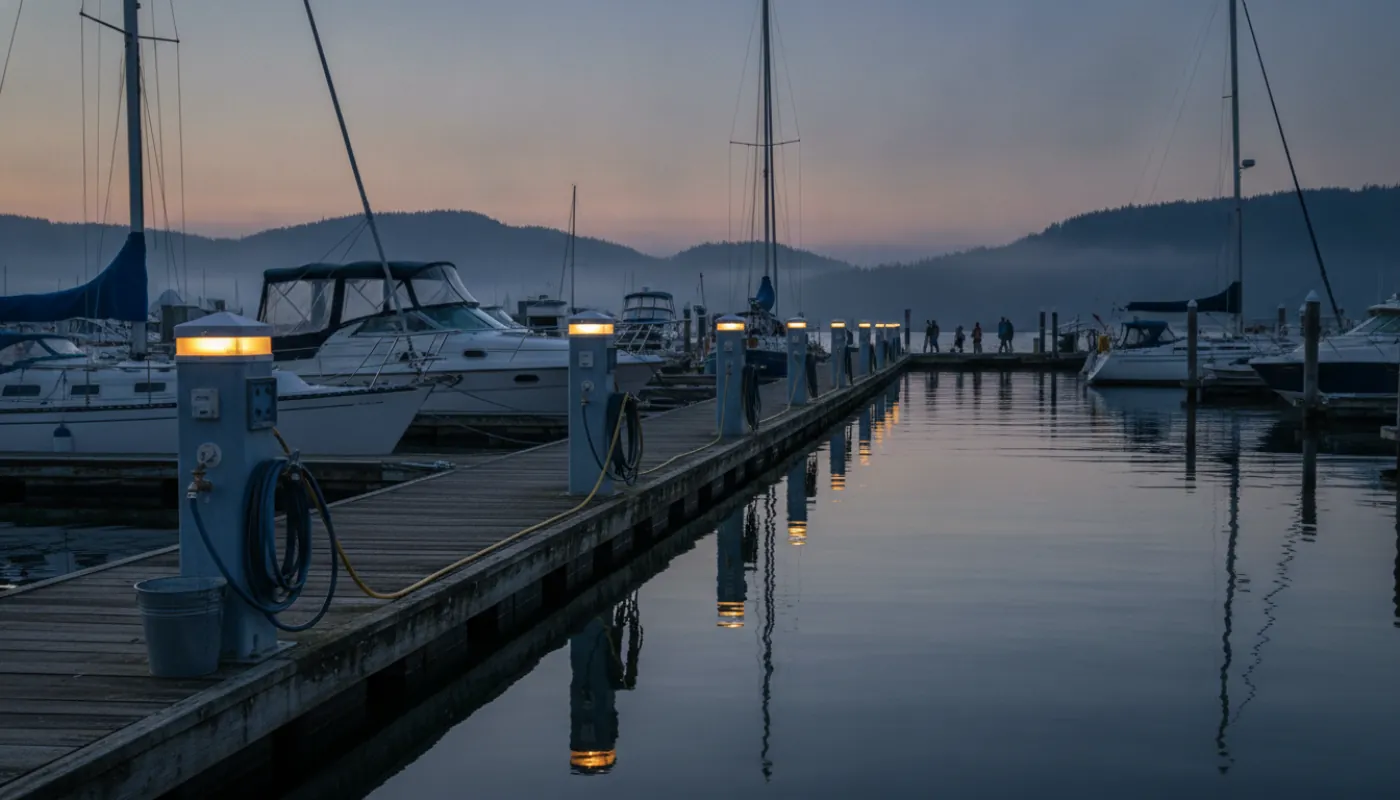
When you call ahead, shore power is the first conversation. Power isn't universal across marinas, and the voltage matters more than you might think. Most US marinas offer 15/20A household, 30A, or 50A service, each rated for a different load. A 50A service (120/240V) runs air conditioning, water heaters, and multiple appliances without tripping a breaker. A 30A setup (120V, about 3,600 watts) is tight when the weather turns hot; a 15/20A household outlet is emergency power only.
Ask specifically: "Do you have 50-amp service available tonight?" Don't assume. Peak season at major ports fills fast, and even a premium slip might drop to 30A during peak demand. Clarify whether power is included in the nightly rate or metered separately, some marinas charge flat fees, others bill per kilowatt-hour. If you're running a genset overnight or charging batteries heavily, a metered system can surprise you with costs you didn't anticipate.
Fresh water pressure varies dramatically. Some marinas have robust systems; others barely trickle. Ask whether water is potable, whether pressure is adequate for showers and galley use, and whether saltwater rinse stations exist for gear cleanup. Seasonal marinas sometimes shut off water during shoulder months, so confirm the system is actively running during your arrival window.
Sanitation & Waste Services
The pump-out station is non-negotiable if you have a holding tank. Call ahead and ask: "Are you pumping-out tonight?" A surprising number of marinas advertise pump-out service but have equipment offline, or the dockhand leaves at 5 PM and you arrive at 6. Some pump-out only during office hours; others offer 24-hour service. Know the schedule before you commit to arrival.
Ask whether pump-out fees are included in your slip rate or charged separately. Ask the volume threshold, some marinas charge flat fees, others meter. If you have a large catamaran or trawler with a 200+ gallon tank, clarify upfront that your full tank won't exceed their daily limit. Marinas don't publish this openly, but a quick call gets a straight answer.
Beyond the holding tank: garbage service. Can you leave trash at the dock or does it require a trip to a central bin? Is there recycling for aluminum and plastic, or does everything go to one dumpster? Multi-day stays at marinas with minimal waste infrastructure force you to manage garbage on the boat, a real problem in summer heat. Marinas with daily-staffed dumpsters are rarer than they should be, so confirm availability and hours.
Security, Access & Dock Services
Transient slips sit at the outer edges of marinas, convenient for coming and going, but farther from office support. Ask whether there's a night-watch presence, gate code, or motion-sensor lighting on the transient pier. Some marinas have security cameras; others rely on neighbors' eyes. If you're leaving gear on deck or dinghying ashore, you want to know the risk profile.
Gate codes and access hours matter more than marina websites suggest. Some marinas lock the gate at 10 PM; others run 24/7. If you're planning a sunset dinghy run to town, you need to know you can get back in. Ask whether the gate keypad is salt-resistant and whether the office will open up if you lose power to your lock system overnight.
Dock services (ice, fuel, pump-out), have limited hours. Confirm before arrival. A marina might advertise a fuel dock, but if it closes at 5 PM and you're arriving at 6, you're fueling the next morning. Same for ice. Some transient slips have no provisioning services; nearby towns handle that load. Knowing this upfront saves real frustration.
Creature Comforts & Extended-Stay Amenities
If you're staying more than one night, laundry transforms from nice-to-have to essential. Ask: "Do you have coin laundry, and do the machines work?" Too many marinas have broken equipment, washers that don't spin, dryers that don't heat. Ask whether machines take coins or cards, whether laundry runs 24/7 or has restricted hours, and whether soap dispensers function. A broken washer ruins your multi-day timeline fast.
Wifi quality is surprisingly variable. Some marinas run enterprise-grade systems; others rely on 2007-era routers that barely reach the transient dock. If you're working remotely or downloading weather files, ask for honest feedback: "What's your wifi signal like at the transient slips?" Marinas with office wifi often don't extend coverage to the outer piers, you might need a booster or phone hotspot.
A few marinas offer shower facilities, lounges, or heated common rooms in winter. These are luxuries, not standards, but worth knowing if you're on a tight budget or caught in bad weather. Some have barbecue areas or picnic tables; others have none. Ask what's actually available, not what's advertised in the brochure.
Pricing, Contracts & Hidden Fees
Transient rates are quoted per foot per night, but extras accumulate fast. Shore power is sometimes included; sometimes it's $5–15 extra. Pump-out fees often surprise. Water hookup adds a small charge at some marinas. Ask for the total nightly cost with all services included, not just the slip rate alone. A seemingly cheap slip becomes expensive once you add fees.
Some marinas require a security deposit for keys or keypad codes, refunded when you depart. Some charge administrative fees for processing a one-night stay. If you're staying just one night, a $15 processing fee stings. Ask about add-on charges before you commit to arriving.
Cancellation policies matter if weather might force a change. Can you cancel with no penalty, or is the first night non-refundable? Some marinas are flexible; others enforce strict policies. Confirm your understanding in writing before arrival so you're not surprised if plans shift.
Questions to Ask When You Call
Don't just ask about slip availability. Use this script: "Hi, I'm looking for a transient slip for [date]. I have a [boat size/type]. Can you confirm: 50-amp service, shore water, pump-out availability, laundry access, and wifi? What's the total cost with all services?" Write down the answers. Email a follow-up confirming the rate and amenities. Print the confirmation. You'll avoid 90% of arrival surprises. Good marinas answer every question clearly before you arrive. If you get vague responses ("we have a pump-out" but no hours, or "wifi might work" at your dock), that's a signal. Marinas that manage transient traffic well are transparent about capacity and services. When you're ready to search, browse available marinas and operators on Boating Hubs to see detailed listings with amenity information. A transient slip is temporary housing. You wouldn't book a hotel without knowing whether hot water and wifi work, marinas deserve the same scrutiny. Thirty seconds on the phone today beats a frustrating night tomorrow.