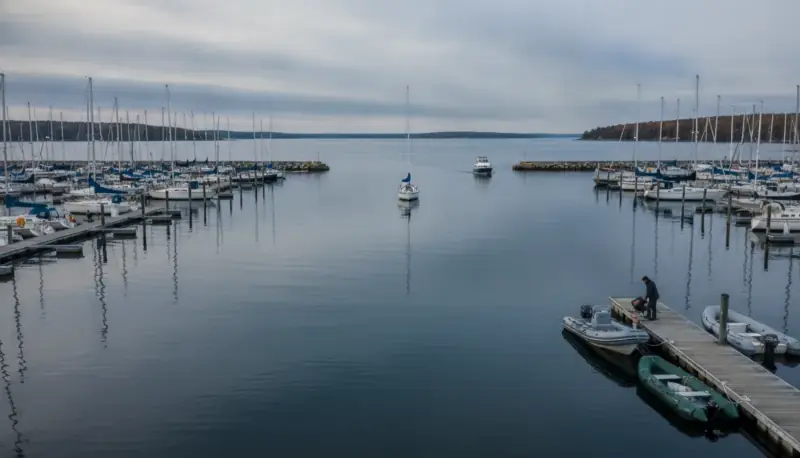
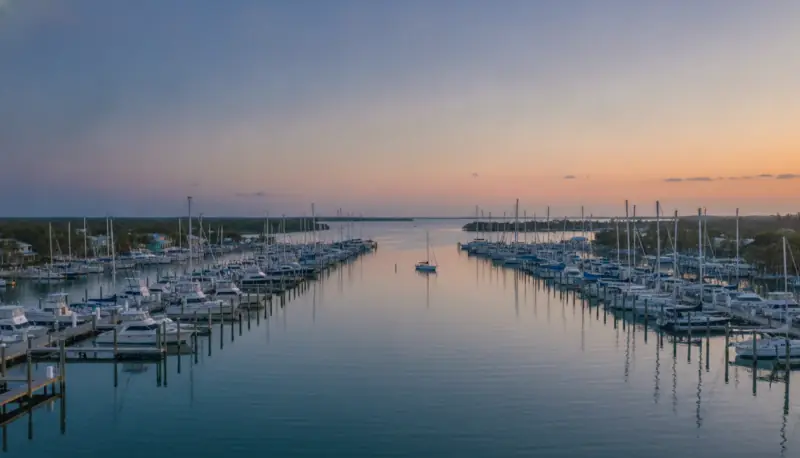
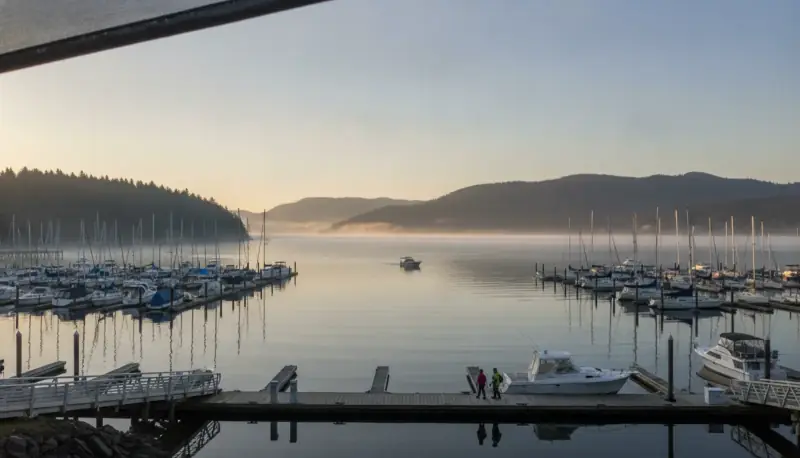
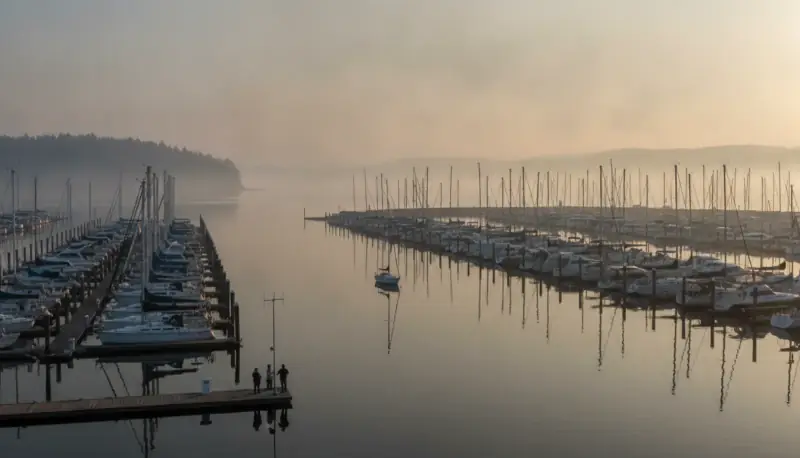
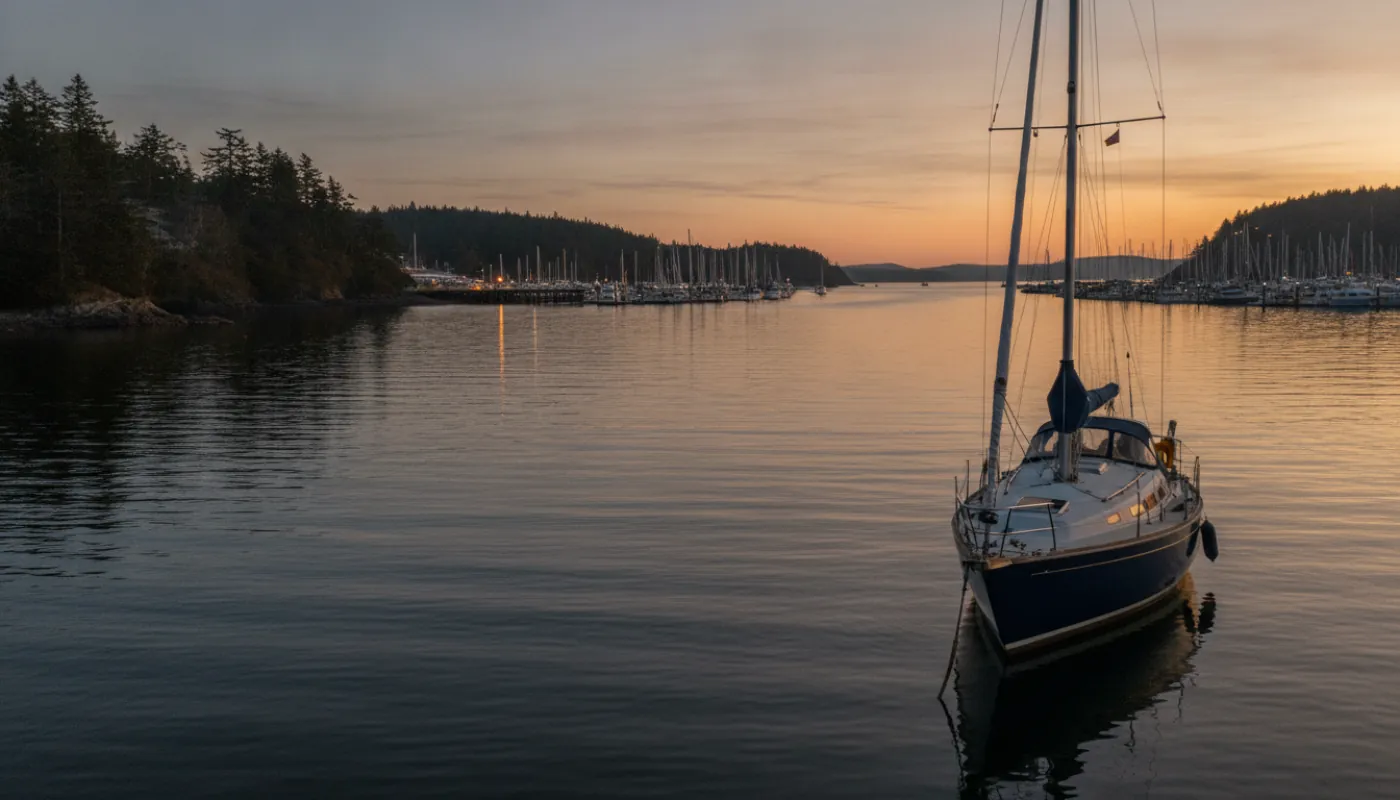
Every cruiser faces the same decision every sunset: drop the hook or call ahead for a slip. The choice is rarely obvious. One path is free, intimate with the water, and demands constant vigilance. The other costs real money but buys sleep, shower access, and someone else's responsibility if the wind picks up at 3 a.m. Neither is inherently "right": the answer depends on your boat, your skill, your tolerance for risk, and your budget.
This guide walks the trade-offs honestly. Not the romantic prose about anchoring under stars (true, but incomplete), and not the assumption that marina slips are always safer (they're not). Here's what actually matters when you're choosing where to spend the night.
The Essential Trade-Off: Freedom vs. Peace of Mind
An anchorage costs nothing upfront. You motor into a protected bay, set your ground tackle, and the boat is yours. No harbor master, no lines to manage, no $75–$150 nightly slip fee. For a crew planning a multi-week cruise or working on a thin fuel budget, the arithmetic is stark: ten free anchorages versus ten slip nights could mean the difference between making your passage and running aground financially.
But freedom carries obligation. You are now the harbor master. Wind direction shifts? You're awake at 2 a.m. confirming the anchor hasn't dragged. Forecast changes to 25 knots overnight? You weigh anchor and motor to a different bay, possibly in weather you'd rather not be in. No water hook-up means showers from a bucket. No power means the fridge stays off or runs off batteries you've been rationing for three days. No fuel dock means your supply is finite.
A marina slip exchanges cash for predictability. You tie off, the lines stay put, and you walk to dinner without running calculations on wind shift probabilities. The shower is hot and unlimited. Your fridge stays cold. You can charge batteries and top off fuel. Laundry is possible. If weather deteriorates, you're behind a breakwater, often with professional help within earshot.
The catch: anchoring can be safer than a marina slip, if you know what you're doing. A well-set anchor in good holding ground will keep you in place through a blow. A marina slip where you're packed stem-to-stern with other boats, with power lines overhead and a narrow exit, might force you to slip your lines and run for open water if a nor'easter shows up and your bow-line fitting tears out. Marinas are not fail-proof, and they're certainly not fail-safe when you're an hour away from a favorable exit.
Cost Comparison: Real Numbers vs. Romance
Anchoring: Free, if you anchor in public grounds. No per-night fee. Your costs are amortized infrastructure: a good anchor system (anchor, rode, shackles, deck fittings) runs $400–$1,200 depending on boat size and redundancy. You buy it once; it's your insurance policy for a decade of cruising.
Real overnight costs creep in if you're anchoring in managed anchorages (common in New England, the Caribbean, and Florida). These charge $10–$40 per night for a mooring ball and the privilege of holding position in a designated spot. Still cheap, but not free. Some anchorages levy a small ranger fee for environmental management, another $5–$15.
Marina slips: Highly variable by region and season. A transient slip in a small southern marina might be $25–$40 nightly in winter; a prominent northeast harbor in summer runs $100–$200 per night. Mega-marinas catering to megayachts price by the foot ($2–$4 per foot, per night), so a 40-footer could run $80–$160. Water and power are usually included; fuel is separate and priced like fuel anywhere ($3.50–$5.50 per gallon).
The cumulative math: A crew that anchors free four nights and takes a marina slip twice weekly might spend $15–$30 per night average. A crew that marinas every night in a mid-tier harbor pays $75–$120 nightly. Over a 30-day cruise, that's $450–$900 difference. That's fuel, provisions, or a repair fund.
| Anchoring | Marina slip | |
|---|---|---|
| Cost per night | Free (public) to $10–$40 on a mooring | $25–$200+ ($2–$4 per foot) |
| Sleep | Anchor watch when it blows | Set the lines and sleep through |
| Utilities | Battery power, rationed water, cold showers | Shore power, hot showers, water, laundry |
| Safety | Excellent if well-set in good holding | Higher on average; worse in a crowded blow |
| Best for | Budget, multi-week cruising, settled weather | Recovery nights, deteriorating weather, tired crew |
Holding Ground and Safety: What Actually Keeps You in Place
An anchor only works if the bottom cooperates. Not all anchorages are created equal, and not all anchors are equal either.
Holding ground types matter. The best holding is mud or clay, your anchor digs in and stays. Sand is acceptable if deep enough; the anchor might slip slightly but should hold. Grass over mud is risky; the anchor may drag through the vegetation. Rock? The anchor might not set at all. A quick dredge with a lead line (a weighted rope you drop to the bottom) or a solo snorkel tells you what you're anchoring into before you commit to sleeping aboard.
Scope is non-negotiable. Scope is the ratio of rode (anchor chain or rope) paid out to water depth. The deeper the water and the stronger the expected wind, the more scope you need. Conventional wisdom says 5:1 scope in settled weather (five feet of rode for every one foot of water depth) and 10:1 or 7:1 scope in rougher conditions. A 35-footer in 15 feet of water with a 25-knot forecast might need 100–150 feet of chain paid out. If you don't have it, or if the anchorage is too crowded to allow it, anchoring is unsafe. A marina slip, by contrast, doesn't care about water depth, you're held by lines and pilings.
Redundancy is insurance. Many offshore cruisers carry two anchors rigged for deployment, a primary hook and a backup. If the primary drags, you can set the secondary. This costs a few hundred dollars and buys a margin of safety that no marina slip can match if you have to leave in a hurry.
An anchorage's safety is also a function of exposure. A bay open to the southwest is fine in a northeasterly but risky if a southern low-pressure system approaches and stalls. Before you anchor, confirm the forecast and know your exit strategy if the wind swings into the dangerous quadrant.
A marina slip can fail (lines can snap, a boat ahead of you can break loose and strike yours, a fuel dock can ignite), but these are exceptions. Marina safety is generally higher on average because infrastructure and people manage the variables. However, a marina full of boats with inadequate fender systems and tight rafting can become a demolition derby in a nor'easter.
Comfort and Convenience: The Hidden Costs of Freedom
Anchoring demands engagement. You must set a reliable anchor in proper scope, watch it hold, check it before sleep, and monitor overnight. Many experienced cruisers set phone alarms to wake and check position at midnight and 4 a.m. if a blow is forecast. This is not paranoia; dragging anchor at 2 a.m. can wreck your boat or someone else's.
You live on battery power and manual water systems. Showers are cold unless you heat water on the stove. Laundry requires rowing to a laundromat if one exists nearby. You cannot run the air-conditioning or heater comfortably without depleting the battery bank or running the engine for hours. Fresh food spoils faster without consistent refrigeration. Galley water is rationed.
A marina slip eliminates these frictions. You wake without a mental checklist. The shower is hot. The fridge is cold. Laundry is a walk away. You can charge everything. You can air-condition or heat the cabin without guilt. Many marinas have courtesy vehicles or shuttle services to grocery stores. Some have restaurants or bars steps away.
For a couple or small family planning a week-long cruise, marina slips every third night is a reasonable compromise: anchor two nights, slip one night, repeat. Your boat and batteries recover; your body gets a real shower. For a crew planning a multi-month passage, anchoring dominates financially, but you accept the physical cost and the constant vigilance.
The Environmental Consideration
Anchoring has an environmental footprint that many cruisers don't discuss. A heavy anchor and chain dropped repeatedly on a soft bottom can scar seagrass beds or disturb marine life. In shallow, heavily-cruised areas (the Florida Keys, for instance), anchor damage to seagrass is measurable and accelerating. Some anchorages now ban anchoring to protect the bottom, redirecting cruisers to paid mooring balls instead.
Marina slips eliminate this direct impact but carry their own burden: marinas require dredging, structures that interrupt fish migration, and fuel/sewage spills that happen. Neither option is impact-free.
If you're anchoring, use good anchoring practices: set the anchor once and stay put rather than re-anchoring multiple times per tide. Confirm you're not over seagrass or a marine sanctuary before dropping anchor. In protected areas, use a mooring ball if available.
Making Your Decision: A Simple Framework
Ask yourself these questions in order:
Is the forecast stable? If the next 24 hours are forecast to trend calmer (wind decreasing or steady, no low-pressure systems approaching), anchoring is safe and economical. If deteriorating weather is approaching or wind is already above 20 knots, a marina slip is the better choice unless you have significant anchoring experience in those conditions.
Do I know the anchorage? If you've anchored there before, held in similar holding ground, and understand the exposure, confidence is earned. If it's your first time, check the cruising guide, read recent comments on anchoring apps, and confirm scope requirements. If information is thin, marina is safer.
Can my boat set and hold a proper scope? Smaller boats (under 25 feet) struggle to carry enough rode for 7:1 scope in deep water. Larger boats and those with chain instead of rope have a significant advantage. Know your limitations.
What is my budget and what is my recovery margin? If every dollar counts, anchoring saves money. If a slip costs less than your daily fuel burn, budget it. If you're exhausted and the marina is affordable, buy the night.
What do I need tonight? An honest shower and eight hours of sleep without alarm-checking? Marina. Another day of slow cruising and light stress? Anchor.
Neither choice is wrong. Experienced cruisers use both, sometimes in the same week. The key is making the decision deliberately, not out of habit, not out of romantic ideation, and not out of fear. Anchoring is an acquired skill that rewards practice and patience. Marina slips are insurance policies. Use them as your judgment and your boat warrant.