Your VHF radio is the most important safety tool on your boat, and you probably aren't using it correctly. Even experienced boaters sometimes ignore the protocol, thinking casualness is fine in an emergency. It isn't. When Coast Guard, other vessels, or rescue coordinators are listening, every word matters. A properly executed radio call saves time, prevents confusion, and, in a real crisis, can be the difference between a quick rescue and a catastrophic misunderstanding. VHF is the maritime standard worldwide. Whether you're running a daysail off the Atlantic coast, taking a charter party across the Gulf, or delivering a boat down the ICW, you live under FCC rules the moment your antenna goes up. This guide covers the protocols that matter: how channel 16 works, what to say and when, how to handle real emergencies, and why newer equipment like DSC is changing the game.
Channel 16 and Maritime Distress Protocol
Channel 16 (156.8 MHz) is the international distress and calling frequency. Recreational boats aren't required to carry a VHF at all, but if yours is switched on and you're not communicating on another channel, the law requires you to keep a listening watch on 16 (or Channel 9). The Coast Guard staffs 16 24/7. Other vessels listen to it as a courtesy, and often as a legal requirement for commercial operators. Channel 16 is sacred: you never use it for casual conversation. It's for emergencies, urgent safety calls, and brief initial contact. To keep 16 clear for distress, the FCC and Coast Guard ask recreational boaters to make routine boat-to-boat and boat-to-marina calls on Channel 9, the designated non-commercial calling channel, hail there, then agree on a working frequency (any other channel where two vessels or a vessel and shore station move their conversation).
The protocol is rigid for good reason. When you key the mic on channel 16, you own the attention of everyone within radio range. A botched call wastes precious response time and can cause panic. Even a social radio chat on 16 ties up the frequency and might block a genuine distress call. The FCC enforces this with fines, though most violations are corrected by Coast Guard radio watch standing a polite lesson over the air. Experienced skippers monitor 16 out of habit, even when cruising on a working frequency. It's the habit that saves lives. Casual operators who jump straight to a working frequency or ignore channel 16 entirely miss the lifeline every boat needs.
Standard Radio Calls and Phonetic Alphabet
When you pick up the handset to call another vessel or a marina, use this format: "Station being called, this is [your boat name], over." Repeat the called station twice, your boat name twice, then wait for a response. Make these routine calls on Channel 9 (the recreational calling channel) where it's monitored, keeping 16 clear for distress. Once contact is made, both parties agree to switch to a working frequency, for U.S. non-commercial boaters, channels 68, 69, 71, 72, or 78, where you continue the conversation. (Don't grab Channel 13: it's the bridge-to-bridge intership navigation safety channel, reserved at 1 watt for ship maneuvering and collision avoidance, not casual working traffic.)
Clarity trumps speed. Speak slowly and deliberately, using the NATO phonetic alphabet for any letters: Alpha, Bravo, Charlie, Delta, and so on. Your boat name is "Whisky Tango Foxtrot", not "W T F", when spelling it out. Mispronounced syllables or slurred words force the other station to ask for repeats, killing efficiency. The word "over" signals the end of your transmission and invites response. "Out" means you're done with the conversation entirely. Never say both together, despite how it sounds in old war movies. The phonetic alphabet isn't quaint tradition; it's the only way to reliably transmit a name or identifier across potential interference and static. A marina operator or another boat responding to your call should be able to write down your vessel's name without asking you to repeat it three times.
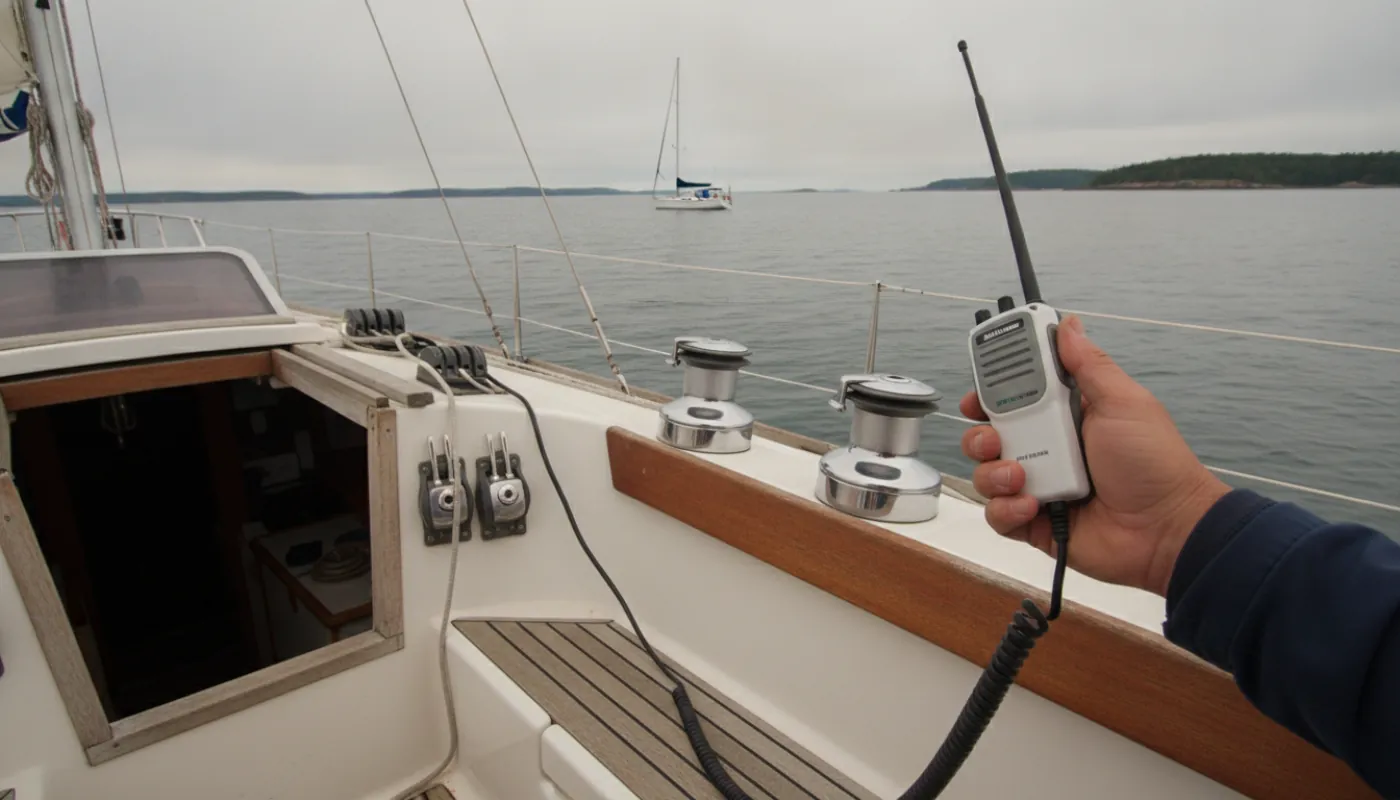
Tone matters, too. Professional skippers sound calm and measured on the radio, even during minor issues. Panic in your voice spreads panic. Confidence, genuine or faked, keeps others calm and focused. A marina operator listening to a confused, hurried radio call will assume chaos. A clear, measured voice suggests you have the situation under control, which often means you actually do.
Distress, Urgency, and Safety Signals
Three signal types govern radio emergencies, in order of severity: Securité, Pan, and Mayday.
Securité (pronounced "say-cure-ee-tay") precedes a safety bulletin: weather, navigation hazards, or other information. A fishing vessel warning of a debris field, or a Coast Guard station broadcasting a hazard, leads with "Securité, Securité, Securité" on channel 16. It stops regular traffic without triggering full emergency response. This signal is rare for most boaters but critical to recognize and respect when you hear it.
Pan (from the French "panne," meaning "breakdown") flags an urgent situation that's dangerous but not immediately life-threatening. Your engine dies in calm water with a working radio, or you lose steering but are still under way. You transmit "Pan, Pan, Pan" and follow with your position, the nature of the problem, and the kind of help needed. Other vessels reduce radio traffic and monitor your situation. A Pan call gets professional attention without the all-hands-on-deck mobilization of a Mayday.
Mayday is the top-tier distress call, used only when life is in imminent danger: the boat is sinking, someone has fallen overboard and you can't recover them, there's a fire you can't control, or injury requires immediate medical evacuation. The format is: "Mayday, Mayday, Mayday. This is [boat name, phonetically], [boat name], [boat name]. Position [latitude and longitude or landmark]. Nature of distress [sinking, fire, medical, etc.]. I require immediate assistance." Transmit this three times if possible, then switch to receive mode and wait for Coast Guard acknowledgment. Never abandon the radio; it's your lifeline. Even a dead engine and no power doesn't mean you're off the air, a working handheld VHF with fresh batteries can still reach a nearby vessel or a shore station within line of sight (typically a few miles boat-to-boat, farther to a tall shore antenna).
Digital Selective Calling and Modern Equipment
DSC-equipped VHF radios (Class D for recreational fixed-mounts; Class A is the commercial/GMDSS grade) transform emergency response. Instead of broadcasting a voice Mayday to anyone in radio range, a DSC "Distress Alert" transmits your exact position, boat ID, time, and distress type digitally. Coast Guard rescue coordinators know where you are the instant you press the button. The boat that responds will be the closest one, not just whoever happens to be monitoring 16 at that moment.
Setting up DSC requires programming your MMSI number (Maritime Mobile Service Identity), a unique 9-digit ID. For a recreational boat that stays in U.S. waters, you get one free or cheap from BoatUS or the U.S. Power Squadrons, not the FCC, which only issues an MMSI as part of a ship-station license you'd need for international or commercial operation. Old-school boaters sometimes skip this because it feels bureaucratic. Don't. The MMSI is how the Coast Guard cross-references your distress alert with your registered boat and your emergency contacts. A Mayday without DSC works, the Coast Guard hears your voice, but a DSC alert with a bad or missing MMSI wastes critical minutes. The digital call also works for routine purposes: hailing another vessel via DSC on channel 16 hands both skippers a private working frequency automatically, reducing chatter on the public frequency. High-end radios link to integrated GPS, autopilot, and chart plotters, giving professional crews powerful navigation and collision-avoidance tools. Entry-level DSC radios cost little more than basic analog sets these days. If you're replacing a radio, buy DSC. It's not optional anymore for serious coastal cruising.
Operator Discipline and Common Mistakes
Most radio discipline problems stem from complacency. New skippers are careful; they study the protocol and execute flawlessly the first few trips. By year two, they're half-keying the radio, skipping the phonetic alphabet, and moving onto working frequencies without formally releasing channel 16. Experienced operators who've never had a real emergency forget why the rules exist. Stay sharp. You don't get a practice run on your first Mayday. The protocol you drill now is the protocol your hands will execute under stress. Keep a laminated card on the chart table with the Mayday format and the phonetic alphabet. Review it monthly.
Common mistakes: keying the mic before you're ready to speak (dead air kills momentum), not giving the other station time to copy your message, failing to repeat critical information, and jumping to a working frequency without confirming both parties understand the plan. Another frequent error is misusing the urgency signals, calling Pan for a minor inconvenience cheapens the term for people with real problems. Keep transmissions brief. Rambling explanations make you sound unprepared. Say what matters: your boat, your position, your need. Let the other station ask clarifying questions. If you run a charter operation or teach sailing, model perfect radio discipline for every student and crew member. Radio etiquette spreads: when people see their captain using phonetics and following format, they assume it's normal, and the next generation of boaters is safer for it. Brevity and repetition are the hallmarks of a professional operator.