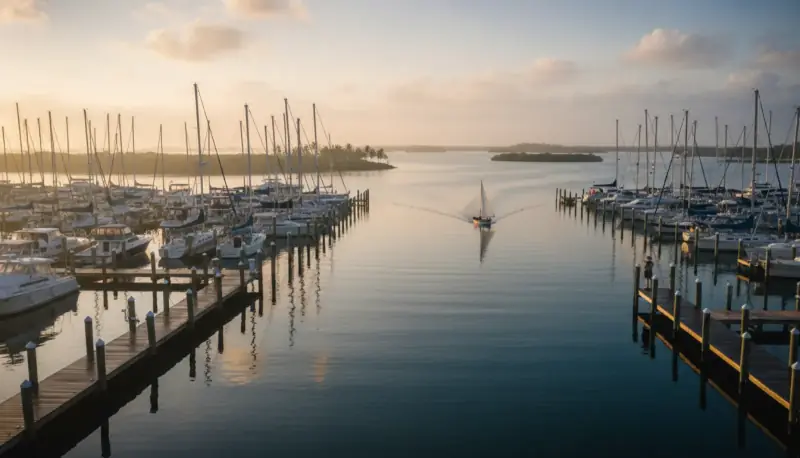
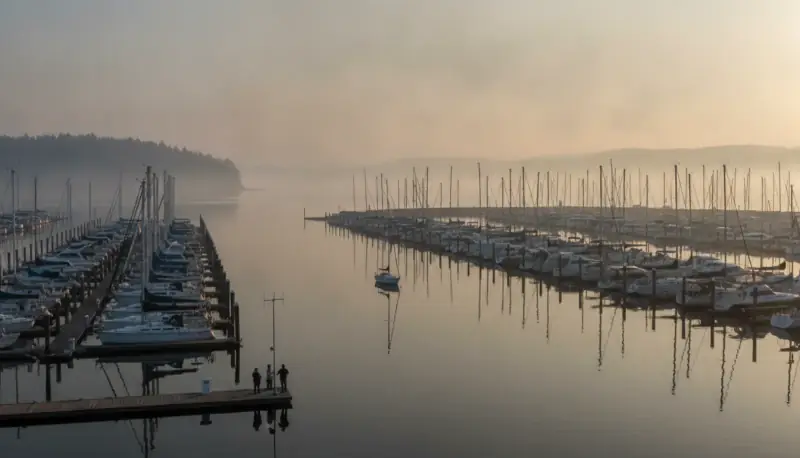
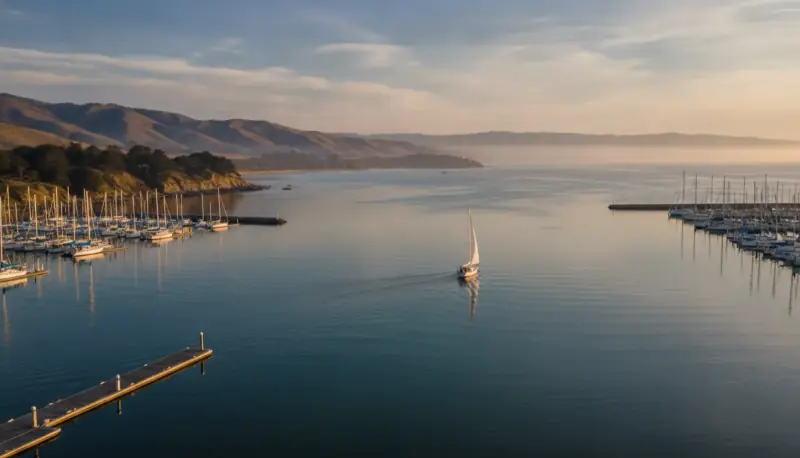
A bareboat charter is the only situation in modern travel where the airline hands you the keys and walks away. The charter base has done the same. From the moment the dock briefing ends, you are the captain: legally, mechanically, and financially.
The pre-departure walkthrough is your last line of defense against finding a fuel leak in 30 knots two days from a port. This is the checklist we'd hand a first-timer the morning of the briefing.
Before you ever leave home
- Confirm your sailing résumé matches the boat. Charter companies will downsize you on the dock if your résumé doesn't match the listed boat, a 45-foot catamaran is a different animal than a 38-foot monohull.
- Carry paperwork on paper, not just in cloud. Passport, your sailing résumé (plus any certificate the base actually asked for: ASA/RYA, say; note the ICC is a European document US sailors generally can't obtain and rarely need for a Caribbean charter), second crew's papers, charter contract, and proof of insurance. Cell service in the Grenadines is a fiction at best.
- Buy travel insurance that names the charter cost as a covered loss. A storm-cancelled trip without insurance is a five-figure write-off.
- Pack soft bags only. Hard luggage doesn't fit in any boat's lockers and the charter base will charge you to store it.
At the briefing: what to actually do
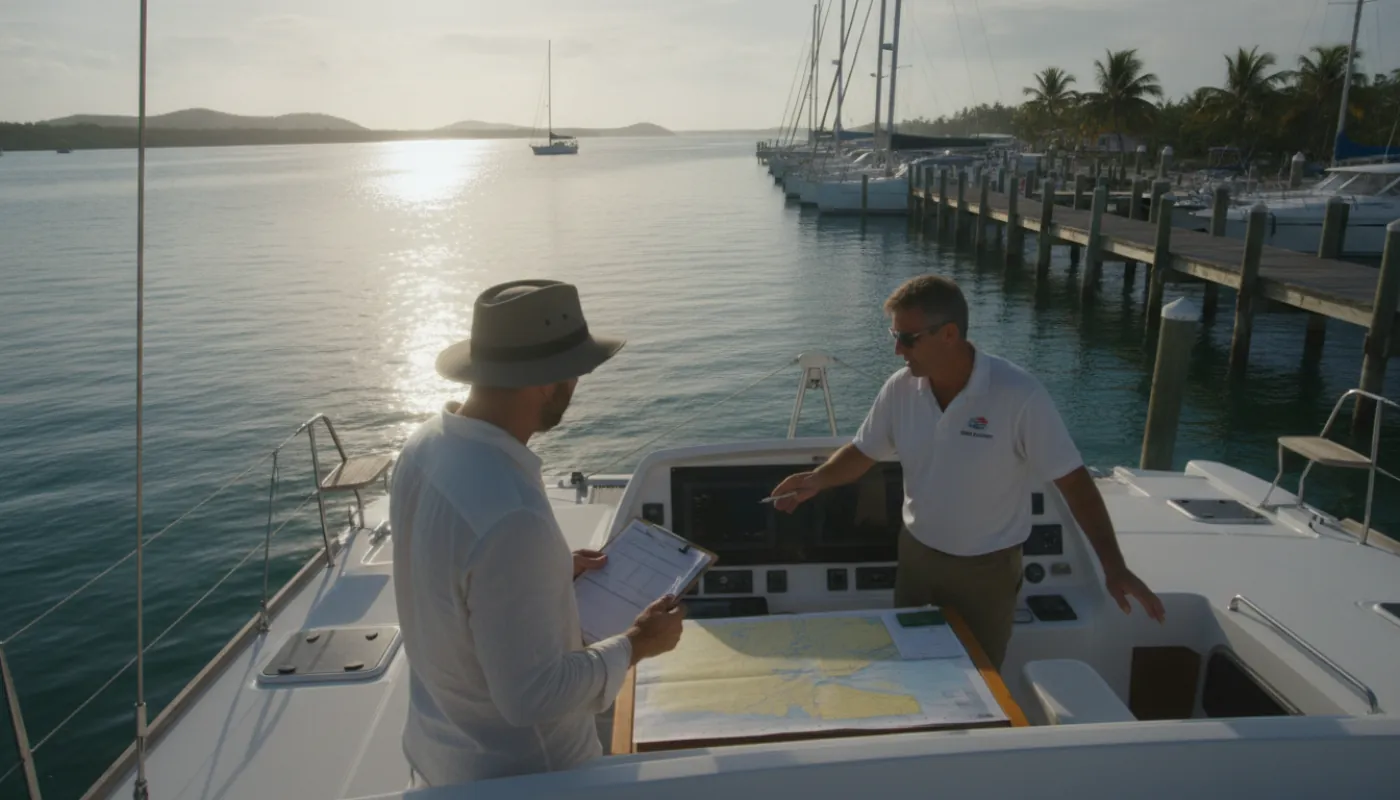
The boat briefing is not a tour. It's the final document handover. Treat it like an aircraft pre-flight.
Engine and systems
- Confirm engine starts cold, idles smooth, and shifts cleanly into forward and reverse at the dock.
- Open the engine compartment. Photograph belt condition, raw water pump, impeller access, and the fuel filter housing.
- Check coolant level and engine oil. Note them; you'll check both daily.
- Confirm location and operation of the seacock for every through-hull. There will be 6–14. You should be able to close all of them in under 90 seconds.
- Locate the engine kill switch and the manual bilge pump handle. Test both.
- Confirm the bilge alarm works. Most don't, on most boats. If yours does, that's a sign the base maintains gear.
Sails and rig
- Drop the mainsail to confirm it actually drops.
- Run the genoa out and roll it back in.
- Check reefing lines are rigged through the boom and visibly led to the cockpit. If you can't reef from the cockpit, ask why.
- Walk the deck and pluck every chainplate, stanchion, and toerail you can reach.
Ground tackle (anchoring gear)
- Watch the windlass deploy and retrieve under power.
- Confirm the manual override handle is on board.
- Count chain markers, if the chain is marked in meters and you think in feet, brief the crew now.
- Note total scope. 50 meters is the practical floor for Caribbean cruising; 60+ is comfortable.
Electrical and tanks
- Watch every battery bank's voltage at rest and under load. The fridge cycling on should knock no more than 0.3V off house bank voltage.
- Note tank levels: water, fuel, holding tank. Photograph the gauges.
- Confirm the inverter works and the chargers run when the engine is on.
Safety gear (this is where briefings get rushed: do not let them)
- Locate and verify: life jackets for every crew, throwable PFD, EPIRB or PLB, flares (in date), fire extinguishers (charged), first aid kit, abandon-ship bag.
- Test the VHF on a hailing channel. Note the boat's MMSI number.
- Note the location of the offshore liferaft and the painter line. Pull on the painter to confirm it's actually tied to something.
Dinghy and outboard
- Start the outboard. Run it for two minutes at the dock to confirm cooling water flows.
- Check that the kill cord lanyard is present and works.
- Check dinghy fuel, most bases hand you a near-empty tank.
The questions worth asking before signing the boat off
- "What's the most-broken system on this hull?" A good base will tell you. ("The salon fridge cycles loud, it's fine.")
- "Where's the nearest safe anchorage if I lose the engine?" Mark it on the chart.
- "Who do I call if something fails offshore, and what hours?" Get the after-hours number on paper.
- "Where is the toolkit and what's in it?" Open it and look. A real toolkit has a multimeter.
- "What's the weather model you use, and what does it show for the week?" Operators who shrug at this question are operators who push boats out in bad weather.
Once you cast off
- Run the engine for 10 minutes before leaving the harbor. If it's going to overheat, it'll overheat now.
- Make your first anchor the easiest one in the cruising area. Don't pick a tight bay for night one.
- Log fuel, water, and waste daily. This catches leaks early.
- Reef before you need to. First reef goes in at 18 knots true, no later. You can always shake it out.
What "great charter operator" looks like
You'll know within 20 minutes of the boat briefing. Great operators:
- Hand you a written punch-list of known issues, not a verbal "everything works."
- Watch you operate the windlass and helm at the dock before signing the boat over.
- Stay on the VHF until they've confirmed you're clear of the channel.
- Have a same-day repair-boat policy for failures inside the cruising area.
If you operate a charter fleet or marina and want bareboat charterers to find you, list your operation on Boating Hubs so first-timers vetting bases can compare you on the things that matter.