If you're serious about bareboat chartering, renting a sailboat without a captain, you'll need proof of competence. That proof comes from a sailing school, and your choice of which one matters more than most people realize. The difference between a mediocre instructor and a good one isn't just comfort; it's the difference between years of hesitation on the water and the confidence to handle real-world weather and passage-making. This guide cuts through the marketing noise and shows you what to actually evaluate when comparing sailing schools for keelboat certification.
Understanding Keelboat Certifications
Keelboat certifications exist in a narrow band: they assume you know nothing and teach you to operate a sloop under 50 feet in coastal US waters. The two major pathways are ASA 101/103 (American Sailing Association) and US Sailing (formerly USYRU). Both are industry-recognized by charter operators and sailing schools nationwide. Neither certification is legally required, you can rent a sailboat without one, but the vast majority of charter companies use these certs as the gatekeeping mechanism for bareboat rentals. Some will accept either; some prefer one. Before you enroll, check with charter operators in the regions where you plan to sail and see which cert they actually value. A school in the Chesapeake might see ASA constantly; a fleet operator in the BVI might weight US Sailing higher. This legwork takes an hour and saves you from taking the "wrong" cert.
The core curriculum is roughly identical: points of sail, sail trim, anchoring, right-of-way rules (COLREGS), and basic seamanship. The biggest divergence is testing format. ASA uses scenario-based assessments where you demonstrate skills on the water under realistic conditions. US Sailing leans written-and-practical but the written portion is more formal. Neither is easier; they're just different flavors of the same baseline competence.
ASA 101/103 vs US Sailing: What Actually Differs
ASA 101 is "Basic Keelboat" and 103 is "Basic Coastal Cruising." Together they form the foundation. US Sailing's equivalent path runs "Basic Keelboat" then "Basic Cruising," with similar scope (its adult keelboat certs are named, not numbered, there is no "Level 1/Level 2"). The practical difference: ASA schools are more numerous in the US, especially in popular cruising grounds like Florida, California, and the Northeast. If you live far from a major sailing center, ASA availability might be the tie-breaker.
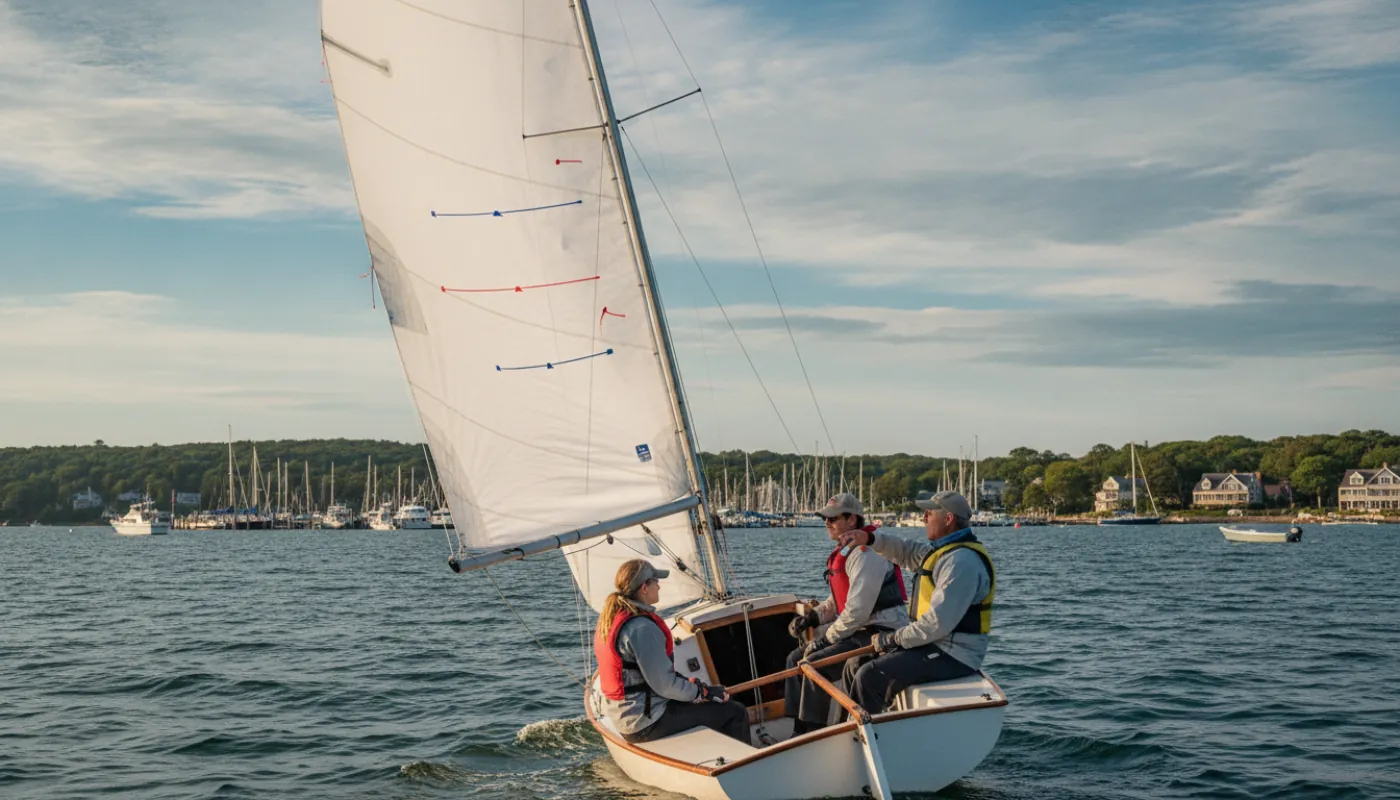
On instruction style, ASA tends toward "learning by doing", you spend more time at the helm with real-time coaching. US Sailing schools often front-load classroom time, then move to the boat. If you're someone who learns better by doing than by lecture, this matters. Ask a potential school how much classroom versus water time their course includes. A legitimate ASA keelboat course should clock 12+ hours on the water over three to five days. Anything less and they're cutting corners.
Cost differences between ASA and US Sailing schools are typically small (roughly $500 to $1,800 for a basic keelboat course), but the school's reputation, instructor ratio, and boat condition matter far more than the certification brand. A expensive ASA course taught by a bored instructor on a tired 30-footer is a worse deal than a mid-range US Sailing program with a passionate instructor and a well-maintained boat.
What to Look for in a Sailing School
The best predictor of your learning is the instructor, not the curriculum. A good sailing instructor has done actual offshore passage-making (crossing to Bermuda, the Bahamas, or beyond), not just weekend racing or day-charter work. When you call a school, ask directly: "How much extended cruising has your instructor done?" If they dodge or cite a few 100-mile passages, move on. Someone who has spent months at sea handling storms, fixing things underway, and making navigation decisions will teach you differently than someone who has only taught students.
Student-to-instructor ratio matters. A three-to-one ratio (three students per instructor) is the realistic ceiling for safe, effective instruction. Anything tighter and the school is cutting safety; anything looser and instruction becomes thin. Watch out for schools that advertise group classes with six or eight students on one boat. You'll spend half the course sitting below, not learning.
Physical boats are the second indicator. Inspect the school's teaching boats before enrolling. Check the standing rigging, turnbuckles, sails, engine condition, and cabin comfort. An older boat isn't disqualifying, a 1980s Catalina or Beneteau can be solid, but signs of deferred maintenance (corroded stainless, torn sails, sluggish engine) mean the school cuts corners. Request the boat's maintenance log or speak to recent students. A school proud of its fleet will share this willingly.
Time and Cost Investment
A basic ASA 101 or US Sailing Basic Keelboat course runs three to five days, consuming a vacation week or long weekend. Expect to pay $500–$1,500 per person for group instruction, or $2,000–$3,500 for private instruction on a dedicated boat. Those prices cover the school's boat, fuel, certification, and instruction; they don't include your travel and lodging. Budget conservatively: a course in a major sailing hub like San Diego, Charleston, or the Florida Keys will be at the higher end.
Intermediate keelboat courses (ASA 103, US Sailing Basic Cruising) add another $600–$1,200 and are optional but worth it if you plan to do multi-day passages or anchor overnight. The intermediate course teaches night sailing, more complex weather interpretation, and deeper anchoring and docking skills, genuinely useful if you're chartering a 40-footer for a week in the Bahamas versus a dinghy for a day trip.
Some schools bundle ASA 101 and 103 into a single week at a discount. If the schedule works, this is better value and keeps your learning momentum high.
Starting Your Charter Career
Once certified, you're not a sailboat captain, you're certified to operate one responsibly under the conditions the training covered. The first charter should be modest: a small sloop in light winds during fair season, not a 45-footer in the Gulf Stream. Charter operators often have "first charter" recommendations; listen to them. They've seen what goes sideways, and their advice is insurance.
Many operators offer free pre-departure briefings or optional coaching for newly certified sailors. Take it. An hour of local knowledge from someone who knows the anchorages and current patterns in the area where you're sailing is worth more than it costs.
Your certification is not a renewal badge. Stay sharp by sailing regularly, take a refresher course every few years if you've had time off, and treat heavy-weather situations conservatively until you have real-world experience under your belt. Schools often discount refreshers for alumni; it's worth the investment.