A charter operator's website shows spotless boats in blue-water destinations and testimonials from happy clients. The listing promises responsive communication and professional service. What it won't tell you is how that captain handles a fuel system failure at midnight, whether the boat's engine hours actually match the maintenance schedule, or whether the operator cuts corners on safety because insurance feels expensive. Online listings are marketing documents, not operational transparency. Choosing a charter operator requires moving beyond the brochure and into the hard questions operators often avoid.
Licensing & Insurance: Non-Negotiable Credentials
Any captain running a crewed charter, where the operator supplies the captain and carries you as a passenger for hire, must hold a current U.S. Coast Guard license appropriate to the vessel and intended waters: typically a 50-ton or 100-ton Master credential, or an OUPV (the "Six-Pack"), which allows up to six paying passengers (not counting crew) on an uninspected vessel. A true bareboat charter is different: no captain is provided, you operate the boat yourself, and no USCG license is required of the operator or of you, there, the vetting shifts to your credentials and logbook (covered below). For a crewed charter, ask for license verification directly, not "we have licensed captains". See the actual license. USCG credentials are publicly searchable through the National Maritime Center if the operator provides a name and reference number.
Insurance is the second pillar. The operator should carry comprehensive marine liability, covering passengers, crew, third-party property damage, and crew wage protection. Don't settle for vague claims like "we're fully insured." Request a Certificate of Insurance naming you (or your client, in the case of crewed charters) as an additional insured. The policy limits matter, inadequate coverage means you're exposed if something goes wrong. A $1 million general liability policy sounds solid until you encounter a hull-damage incident with $500,000 in third-party claims. Reputable operators don't hesitate to produce proof. If an operator fumbles this question, move on.
Red Flags in Safety Practices & Maintenance
Safety culture reveals itself in the operator's willingness to discuss maintenance, not just their safety record. Ask for the maintenance schedule, a real one, with dates and completed line items. Reputable operators track engine hours, haul-out schedules, underwater-hull inspections, and system overhauls. If you get pushback ("we maintain everything") or vague language, you've found your red flag.
Incident history is fair to ask about. No operator is accident-free over a five or ten-year run, but how they describe near-misses, weather incidents, or equipment failures tells you whether they view safety as insurance theater or operational priority. An operator who says, "We had a battery failure last year, dropped to two engines, made it to port safely, and upgraded the electrical system immediately," is demonstrating accountability. An operator who says, "Nothing bad has ever happened to us," is not being honest or is too new to the business.
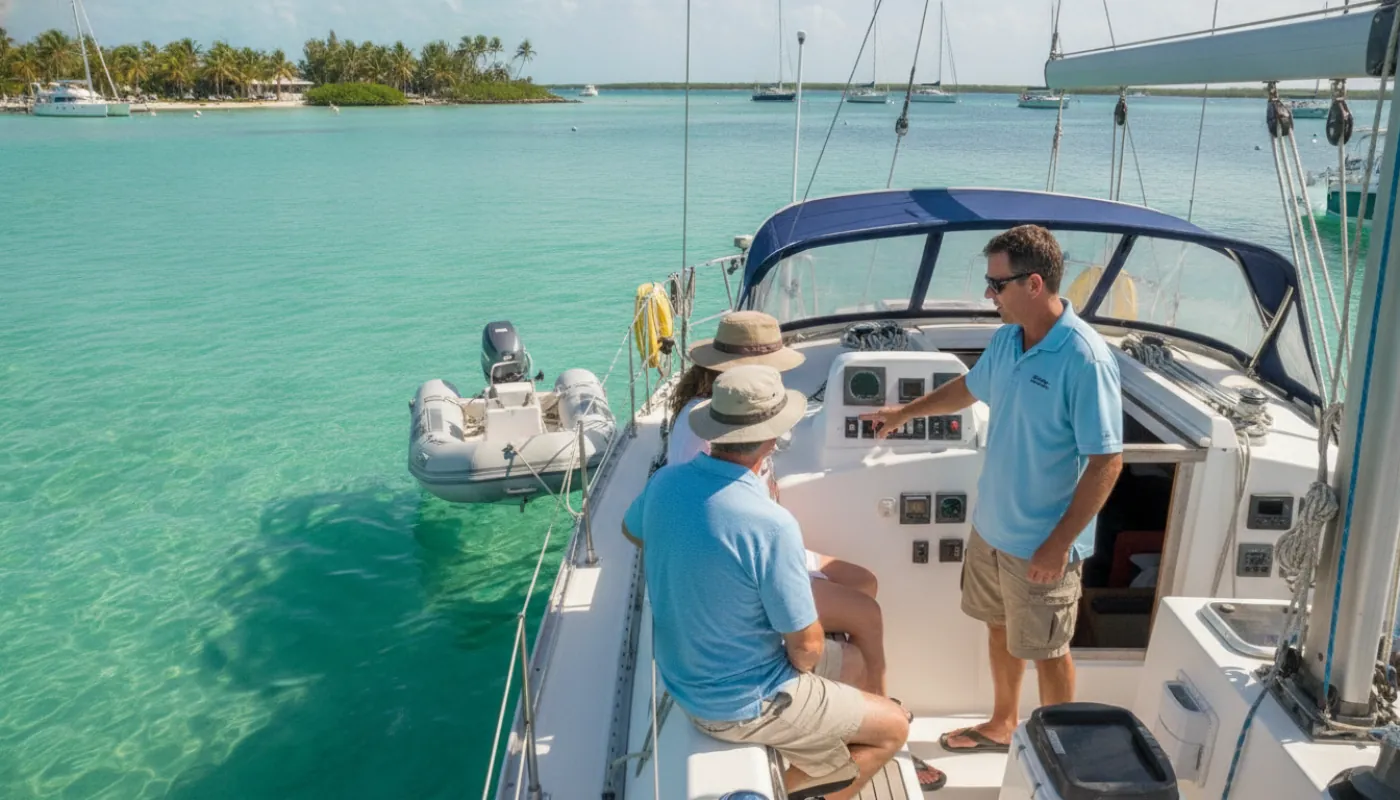
Crew briefing and safety drill protocols matter for crewed charters. Legitimate operators should run a pre-departure safety briefing covering lifeboat procedures, MOB (man-overboard) drills, and emergency communication. Bareboat operators should walk you through the boat's safety gear, abandon-ship kit location, emergency radio procedures, and when to call the Coast Guard. If the operator treats this as a checkbox item or skips it entirely, they don't prioritize the scenarios that matter when systems fail.
Bareboat vs. Crewed: Know What You're Buying
The two charter types demand completely different vetting. Bareboat operators charter you the boat and assume you know how to operate it, or, increasingly, charter to experienced skippers only. A reputable bareboat operator asks to see your sailing credentials or logbook before handing over a $200,000 boat. They're assessing your risk, not just selling you a vacation. If they don't care about your experience level, they're managing liability poorly and probably every other thing, too.
Crewed charters put the captain and crew in front of you as the product. Here, you're vetting people, not just equipment. Did the captain train with the crew? How long has the crew worked together? Does the crew rotate seasonally (watch out for burn-out and corner-cutting) or stay stable? A captain who's captained the same boat with the same crew for three years has solved problems and built routines. A captain switching vessels every month is trading experience for flexibility, which works if the operator invests in training, and rarely does.
Some operators blur the line by offering "semi-crewed" options: you sail and manage the boat, the crew handles provisioning and cooking. This is a higher-skill operation that depends entirely on the operator's ability to match crew experience to your competency. Be suspicious if the operator can't articulate how they assess this fit.
Communication & Contract Clarity Reveal a Lot
How an operator communicates before you pay reveals how they'll communicate when problems arise. Does the operator answer detailed questions about systems, safety, and expectations? Or do they redirect you to a FAQ or tell you "everything is explained in your welcome packet"? Do they respond within hours, or days? A professional operator treats pre-booking inquiries as the beginning of a relationship, not an interruption to their day.
Read the contract thoroughly before booking. Reputable operators spell out cancellation terms, payment schedules, refund conditions, liability waiver specifics, and what happens if the boat develops mechanical problems mid-charter. They should clearly define what's included (fuel, docking fees, provisioning, crew expenses) and what's extra. Vague contracts are intentionally vague, the operator is preserving the option to charge you extra later or deny refunds under ambiguous grounds.
Ask about their weather cancellation policy explicitly. If high winds or dangerous conditions develop, what happens to your charter? Can you reschedule for free, apply credit, or do you forfeit payment? A fair operator absorbs the risk of weather; a defensive one makes it your problem.
Practical Vetting: References & Trial Interactions
Request recent client references and contact them directly. Not testimonials, real names you can call. Ask what surprised them, what they'd change, and whether they'd book again. Honest feedback often comes in the form of "the captain was fantastic but the boat needed better galley organization" or "crew was professional but the pre-trip briefing could've been more detailed." Glowing absolutes ("everything was perfect") or complaints that sound manufactured both signal less reliable feedback.
If possible, arrange a trial run or video tour with the actual captain or crew before committing to a full charter. A one-hour sail or dock walk-around shows you how the captain interacts with you, how they operate the boat, and whether their personality matches the marketing. You'll immediately sense whether they're competent and whether you trust them.
Check for third-party reviews on sailing forums and charter community groups, but apply critical reading: one bitter customer doesn't determine an operator's reliability, and neither does a 5-star campaign. Look for consistent patterns. If you see "unprofessional communication," "unexpected charges," or "safety shortcuts" mentioned by multiple unconnected reviewers, believe the pattern.
Finally, trust your discomfort. If an operator seems evasive about credentials, maintenance, or safety questions, or if your emails go unanswered, you've been handed a clear message. Reputable operators compete on transparency and responsiveness because they have nothing to hide. The boats and destinations are replaceable; the operator's judgment and accountability are not.